Chapter 2
AI in transport?
From code to contact
Uber and the human face of algorithms
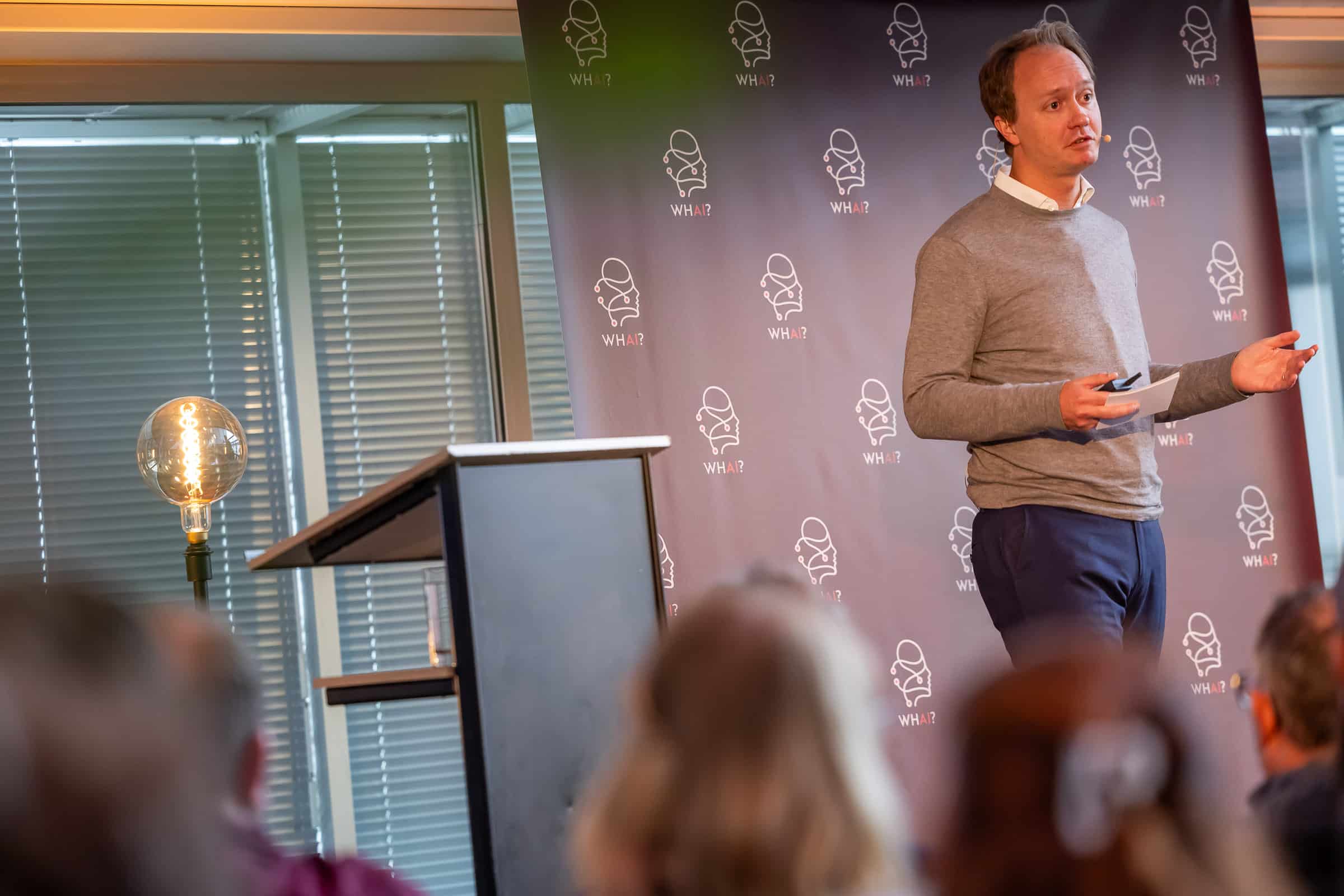
When Laurent Slits, General Manager of Uber Belgium, took to the stage at WHAI? some were surprised. For many union activists, Uber symbolises the very frontier of algorithmic labour: fragmented, opaque, precarious. But Slits was not there to defend the platform model – at least not uncritically. He came to talk about evolution and, perhaps even, common ground.
He began by laying out how deeply AI is embedded in Uber’s operations. From ride-matching and dynamic pricing to fraud detection and customer service, AI runs in the platform’s veins. At every level, data drives decisions – fast, automated and largely invisible to the humans on both sides of the app.
But in his talk, Slits acknowledged what is often left unsaid: these systems affect real lives. They decide whether a driver gets a ride, how much they earn, when they work, and whether they are penalised – or even deactivated. That is a heavy load for an algorithm to carry. And it is precisely why he said Uber in Belgium chose a different approach: engagement instead of confrontation.
In a rare example of sectoral dialogue within the platform economy, Uber entered into negotiations with BTB, the Belgian transport union.
The result? A pioneering agreement that outlines basic protections for drivers: improved access to information and a formal channel for consultation. Is it perfect? Of course not. But it is a start. And in a digital labour market too often defined by silence and asymmetry, talking – and listening – is already progress.
Slits spoke of AI not as a threat or a saviour, but as a tool – one that can either undermine or enhance fairness, depending on how it is used. “Algorithms do not have values”, he said, “people do”.
This sentence hung in the room because it cuts to the core of what unions have been saying all along: technology is not destiny. It is shaped by intent, oversight and negotiation. It is political.
To be clear, Uber’s model still raises big questions: about employment status, data transparency and power. But the agreement in Belgium is important as it shows that platforms are not immune to pressure. And when unions organise, even the most data-driven companies have to sit down and talk.
Algorithms do not have values.
People do.
For trade unionists, the lesson is not to idealise Uber’s change in tone – but to recognise the strategic opening. AI in transport is not going away. But the idea that it must be adversarial, extractive, and unregulated? That is a myth. And like all myths it can be challenged.
In the end, Slits offered not a roadmap, but a window into how dialogue can begin even when interests diverge.
The need of regulation to create a ‘level playing field’ should also be mentioned. If some platforms go for social dialogue and others do not, if some platforms recognise unions and others do not, then a situation of unfair competitive advantages might occur. This is well illustrated in Belgium where Takeaway/Just Eat has employees on the payroll, while competitors in the same area are working with falsely identified ‘self-employed’ riders. Actually, Takeaway is under increasing pressure to restructure and downsize its workers’ rights.
And that is perhaps the quiet revolution beneath the algorithms: the return of the conversation.
Why BTB signed a memorandum with Uber?
When BTB signed a memorandum of understanding with Uber, it raised more than a few eyebrows. Not just among our usual critics, but also within our own ranks. “Uber?” people asked. “The company that spent years ignoring trade unions and undermining labour rights?” Yes – that Uber.
And yet we signed. Not because we have suddenly become fans of platform capitalism. Not because we naively believe Uber has turned over a new leaf. But because, as a union, we must be present where people work. And because you achieve more at the negotiating table than by shouting from the sidelines.
Let us be clear: in Belgium, thousands of drivers and couriers work through Uber. Many of them are not doing so by choice, but out of necessity. Often they are young people, migrants or workers without a safety net. They deserve a union at their side too. And through this agreement, BTB is now officially recognised by Uber as their representative. For the first time, we can intervene, mediate and defend their interests.
But let there be no misunderstanding: this agreement does not mean we agree with Uber on everything – far from it. We fundamentally disagree with their position on the employment status of drivers and couriers. Uber continues to treat them as self-employed. We, on the contrary, will continue to fight for them to be recognised as employees, with all the rights and protections that entails.
So no – this is not a whitewash. We do not forget Uber’s past. But we also know that you do not change the future by turning your back on reality. You change it by getting inside the fortress that was once closed to all social dialogue and building union power from within.
This agreement is a breakthrough. It is the first time in Belgium that a platform company has officially recognised a trade union. It is a foot in the door. A step toward collective rights in a sector that has long operated in a legal grey zone.
Yes, it is controversial. Yes, it sparks internal debate. But that’s what trade unionism in 2025 looks like. Not just defending the traditional structures – but organising the new world of work too. Not choosing the easiest path, but the one that matters most. That is what BTB did in Belgium, just like GMB in the UK, TWU in Australia, UGT in Spain, …
So let us say it plainly: we would rather be in dialogue with Uber than leave their workers on their own. Trade unionism isn’t about ‘purity’. It is about being present – where workers need us most.
Optimising logistics
without losing the human Touch
In logistics, every second counts. And every kilometre, pallet and delay costs money. So, it is no surprise that AI has found fertile ground in the world of warehouses, fleets and supply chains. But when Erik Lamoral, CIO of H.Essers, the Belgian logistics company, spoke at WHAI?, he did not begin with numbers. He began with responsibility.
Lamoral laid out the role AI plays in his company: route optimisation, predictive maintenance, traffic analysis, fuel efficiency and safety planning. These are not futuristic experiments. They are operational realities. His message was clear: AI helps move goods faster, greener and with fewer errors. It is not about replacing people – it is about empowering systems.
But unlike many tech evangelists, Lamoral did not frame AI as a silver bullet. He acknowledged its limits, blind spots and potential to alienate workers or create dependency. And he stressed something rarely heard from the C-suite: human oversight is non-negotiable.
At H.Essers, AI suggestions are reviewed by professionals. Algorithms might propose a faster route – but drivers and planners still make the call. Machines can predict delays, but it is people who manage the consequences. “AI can help,” Lamoral said, “but it cannot feel, care or see the full picture”.
This humility opened the door to something unions often find missing in corporate tech strategies: dialogue.
Lamoral did not claim that everything at H.Essers is perfect. But he showed that it is possible to introduce advanced technology without erasing the human touch. It requires intention, consultation and a willingness to prioritise safety and dignity over marginal gains.
He also touched on sustainability – a priority for H.Essers and a challenge for the entire transport sector. AI helps the company reduce emissions, cut waste and align with climate goals. But again, he cautioned against techno-solutionism. Smart routing is no substitute for political will. Efficiency is not a synonym for justice.
Perhaps most importantly, Lamoral recognised the importance of worker engagement in digital transitions.
AI can help, but it cannot feel, care or see the full picture.
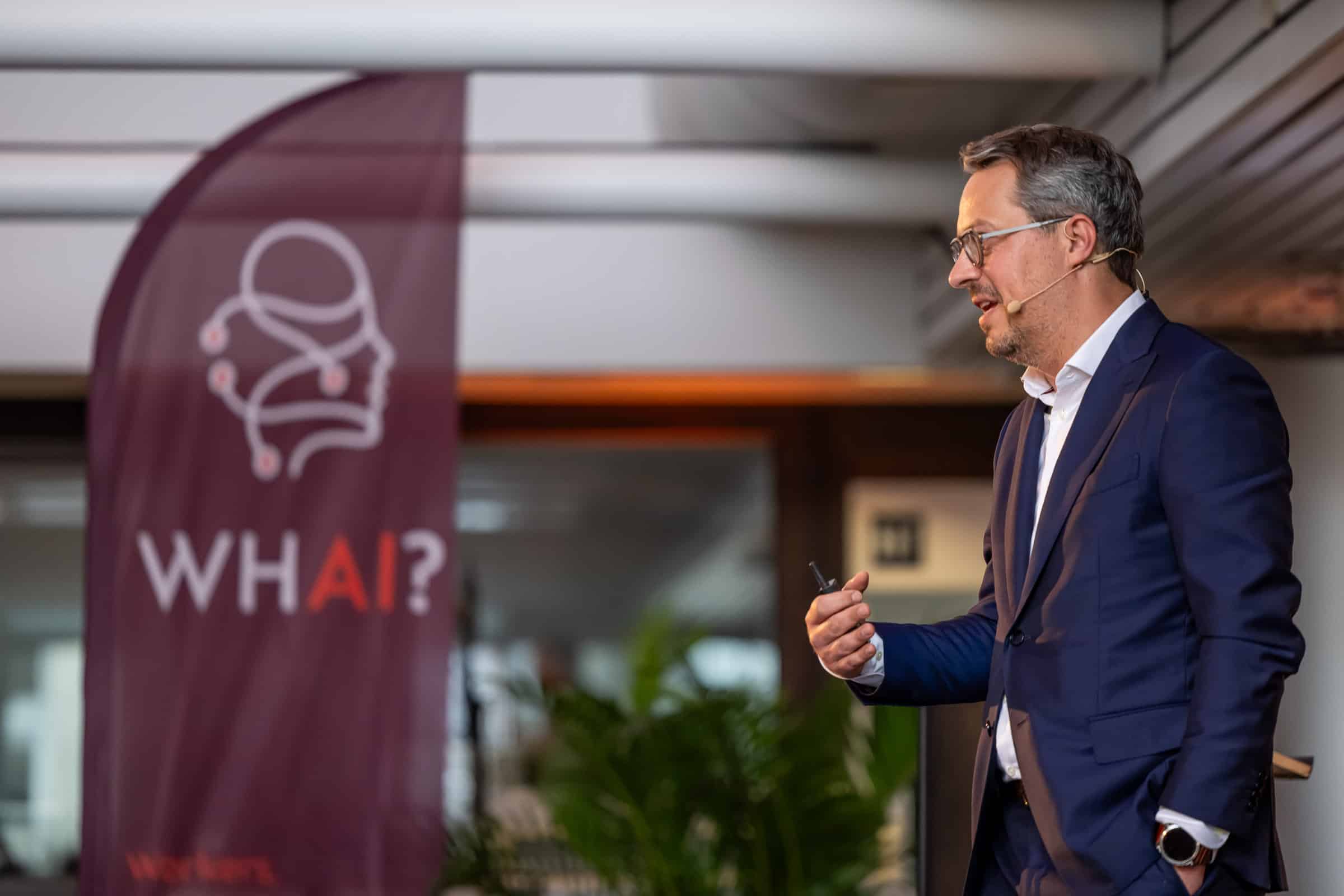
Lamoral spoke about training, internal communication, and the need to make AI comprehensible and transparent for all employees. When people feel involved, he said, they are more open to change. When they are excluded, even the smartest system creates resistance.
In many ways, his talk offered a counter-narrative to the typical AI success story. Integration not disruption. Quality not cost-cutting. And managing friction with respect, not by eliminating it.
For unions, the takeaway is clear. Not every employer is ready to talk like Lamoral. But when they are, we should be ready to engage in the conversation and respond with demands that reflect the new terrain: algorithmic transparency, digital co-determination and ethical AI governance.
That is why trade unions should not hesitate to be at the table where decisions are made. Not to simply oppose, but to come with our own agenda and proposals.
Because in a world where decisions are increasingly automated, trust must be built – not coded.

The law Is lagging and workers are paying the price
If technology moves fast, the law moves slowly – often too slowly for the workers caught in the middle. At WHAI?, Stefania Marassi, Senior Lecturer in European Labour Law and a PhD candidate, offered a sharp and sobering analysis of just how deep that legal gap runs.
Her core message? Labour law was never designed for algorithms. And if we do not act quickly, workers’ rights risk being left behind in the digital dust.
Marassi spoke from experience. As a lecturer in European labour law and a researcher focused on algorithmic management, she sees how AI systems are already transforming employment relationships – not just in theory, but in case after case. And too often, she said, those systems operate outside the bounds of meaningful regulation.
Consider the basic right to information. In traditional employment, a worker can challenge a decision, demand a reason and speak to a human manager. But when the decision is made by an algorithm – to cut hours, withhold bonuses or deny access to shifts – who do you appeal to?
And even if you could, would you understand the logic that led there?
This is the central danger of AI in employment: it produces decisions that are legally impactful, but functionally unaccountable. Marassi called this ‘governance by opacity’ – and it is spreading across the transport and logistics sector, especially in platform-based work.
What kind of innovation are we defending if it comes at the cost of dignity and democratic control?
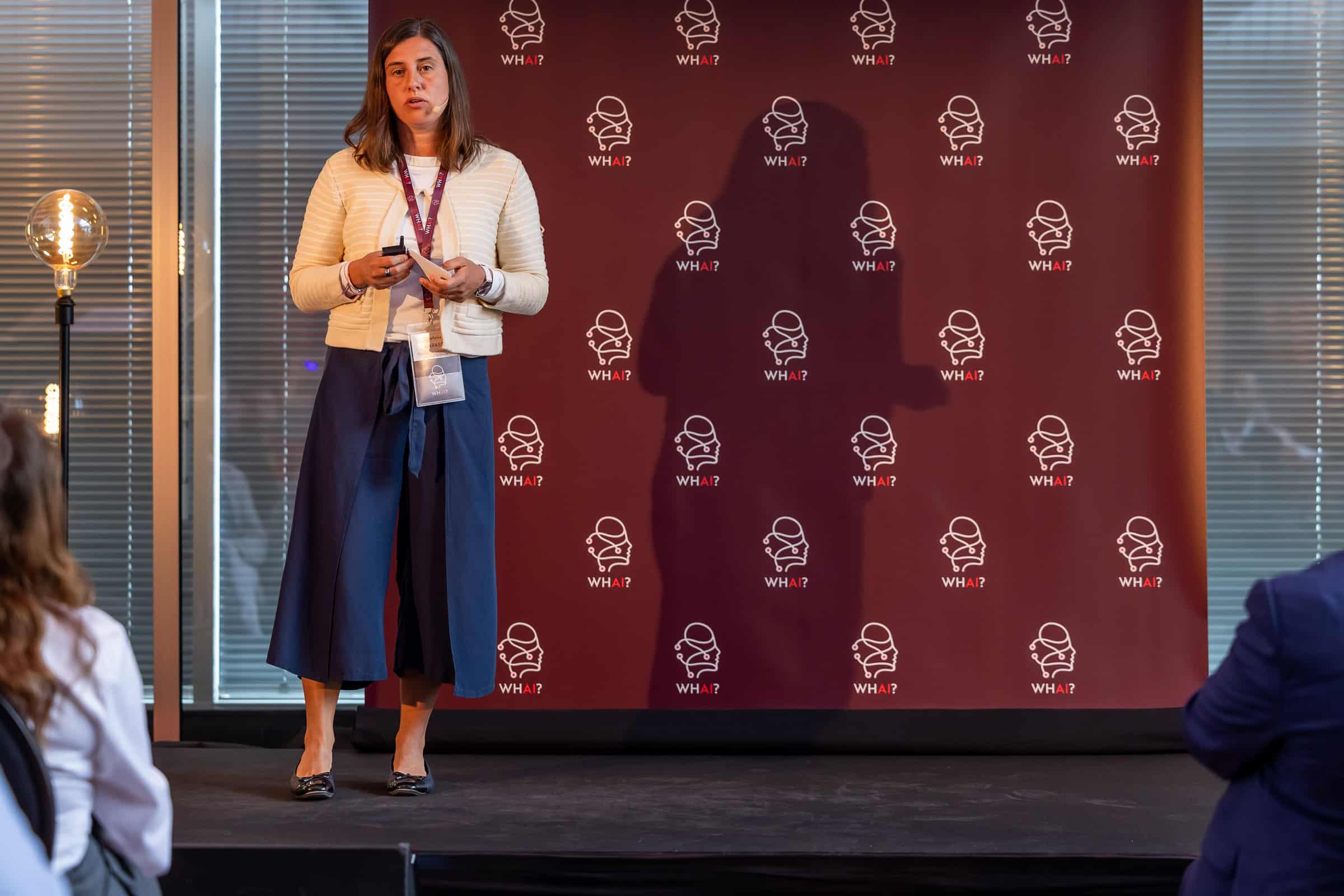
She pointed out that existing legal frameworks – including the EU’s General Data Protection Regulation (GDPR) – offer some tools such as the right to an explanation and the right not to be subject to automated decision-making. But these rights are vague, underused and too easily ignored by companies who frame AI as proprietary or too complex to disclose.
That is why Marassi called for a new generation of labour law – one that recognises algorithmic management as a core issue, not a side effect. This means expanding the scope of collective bargaining to include data governance, demanding full transparency for AI tools used in HR processes and ensuring that AI systems cannot be deployed without proper social and legal safeguards.
She also urged trade unions to build alliances – with legal scholars, civil society and digital rights organisations – to push back against the narrative that regulation kills innovation. “What kind of innovation are we defending,” she asked, “if it comes at the cost of dignity and democratic control?”.
Her tone was not alarmist. It was precise, principled and political. She was not arguing against AI – but against its unregulated, unilateral deployment in workplaces where power is already uneven.
For trade unions, her message was both a warning and a blueprint. The legal battle over AI has already begun. If we do not shape the standards now – at national, European and global levels – we may soon find that the rules have been written without us.
And as Marassi reminded us: rights that are not enforced are rights that do not exist.
WHAI? 2025
Workers, Unions & the Algorithmic Shift