Chapter 5
AI at a crossroads:
ethics, climate and the future?
Between fear and progress –
can digitalisation make society more humane?
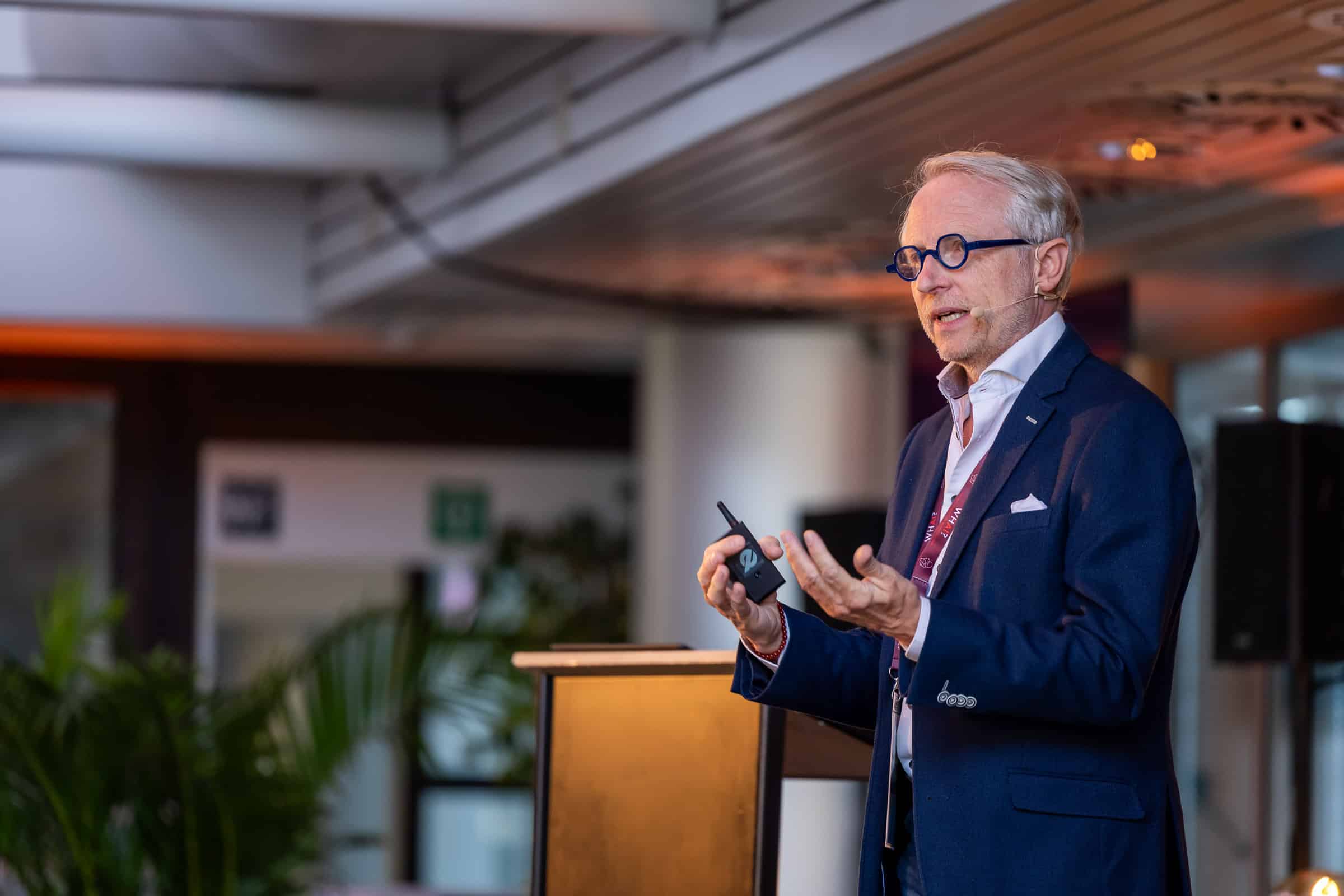
Thierry Geerts did not come to WHAI? to defend Big Tech – though some may have expected it. Instead, he came with a different mission: to reframe the narrative around AI, digitalisation and the world we are building.
“We must stop being afraid of the future,” he said. “Technology, when used correctly, can help us build a more sustainable, more inclusive, more humane society.”
It was a bold statement and one that sparked both agreement and discomfort in the room. Geerts was not blind to the risks of AI, but unlike many speakers, he asked the audience to also see its transformative potential.
The long view
Geerts urged the audience to zoom out.
He reminded them that every major technological shift in history, from the printing press to electricity to the internet, was met with fear and resistance.
“We tend to overestimate short-term disruption,” he said, “but underestimate long-term benefits”.
In his view, AI is no different. Yes, it will reshape jobs and cause disruption. But it also offers tools to tackle the biggest crises of our time, from climate change to healthcare and education access.
Geerts called this the ‘opportunity of digitalisation’: not just to be more efficient, but to do better.
The ethical pivot
But optimism, he said, is not naivety. Geerts acknowledged the ethical crossroads we are facing: mass surveillance, data misuse and exclusionary algorithms for starters. “These are not flaws in the system,” he said, “they are consequences of choices – business, legal, political”.
That is why, for him, ethics cannot be outsourced to developers or left to chance. “The future of AI is a question of governance,” he said, “yes, we need rules. But more than that, we need values”.
You have a responsibility.
Not just to protect workers from change but to help shape that change.
Those values, he insisted, must be at the core of technological design, not an afterthought. Privacy, fairness, transparency and sustainability – these are not ‘nice to haves’. They are the foundation of digital trust.
And here, Geerts said, is where civil society, including trade unions, must step in. Because no matter how advanced the technology, it cannot answer the question: what kind of society do we want?
That is a human decision. And it is a political one.
The green digital
Geerts made an unexpected connection between AI and the climate crisis, two topics often treated separately.
Digital tools, he argued, are essential to building a carbon-neutral society. Smart grids, predictive maintenance and AI-driven logistics are not hypothetical. They are already improving efficiency and reducing emissions in sectors like transport, energy and agriculture.
But the green promise of digitalisation will not deliver on its own. It requires public investment, industrial strategy and strong democratic oversight.
“Technology will not save us,” Geerts said, “but it can help us save ourselves – if we make the right choices”.
A challenge to the room
Geerts ended not with reassurance, but with a challenge.
To the unions in the room, he said: “You have a responsibility. Not just to protect workers from change, but to help shape that change. To make sure it leads to dignity, inclusion and sustainability”.
To the policymakers: “Do not let fear dictate the rules. Let values lead instead”.
And to society as a whole: “The most human thing we can do is build the future – together”.
Code, control and conscience –
why ethical AI starts with humans
When asked at WHAI? whether AI can be ethical, Lode Lauwaert, assistant Professor of Philosophy, paused and then offered a careful reply. “AI itself has no ethics. It cannot. It is not human”. That distinction may seem obvious, but it lies at the heart of his work and his warning: we must stop attributing moral responsibility to machines and start taking responsibility for the systems we build.
As technology grows more powerful and more invisible, Lauwaert argues that ethical clarity is more urgent than ever. Because with AI, the danger is not that the machine becomes human, but that humans forget how to be humane.
The ethical fog
Lauwaert describes the current moment as one of ‘ethical confusion’. Decisions that used to be made by humans – such as whom to hire, how to allocate resources and how to rate performance – are now delegated to systems built on data and algorithms. But these systems are not value-neutral. They are built by people, trained on biased histories and deployed in unequal societies.
Worse still, he said, we often treat the outputs of AI as facts, rather than as decisions shaped by assumptions, omissions and priorities. The result? A growing gap between accountability and power.
“When an algorithm makes a mistake, who do you blame?” he asked. “When it reinforces injustice, where do you protest?”
These are not just technical dilemmas – they are moral and political ones.
Transparency is not enough
There is a growing movement in tech circles for explainable AI: systems that can show how they arrived at a decision. Lauwaert is sceptical. “Transparency is a start, but it is not a solution,” he said. “We do not just need to know how an algorithm works. We need to ask why it exists, who it serves and what kind of world it is building”.
When an algorithm makes a mistake, who do you blame? When it reinforces injustice, where do you protest?
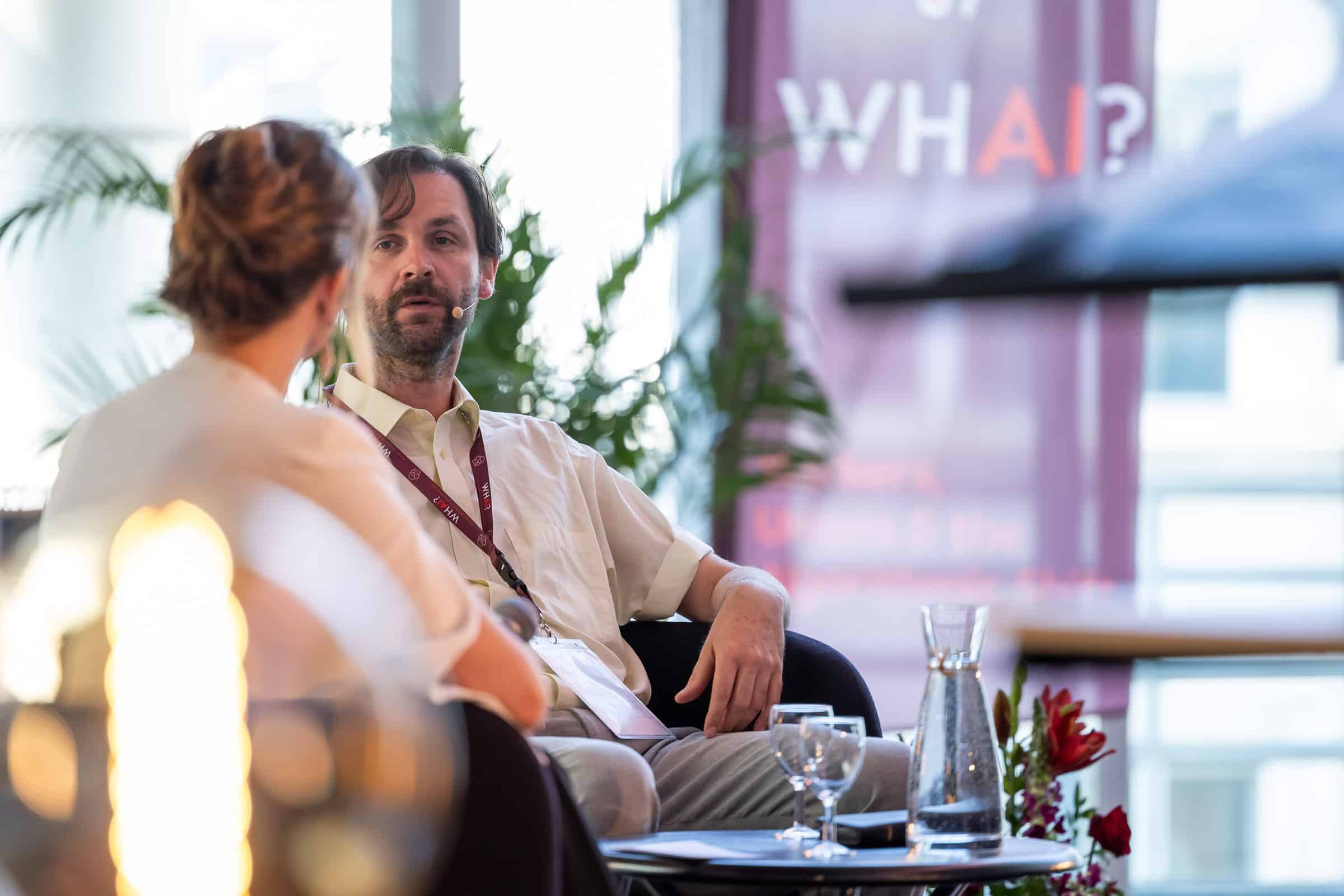
He warned against what he calls ‘ethics washing’ – when companies set up advisory boards or publish principles but continue harmful practices. Ethics, he reminded the audience, is not a PR strategy. It is a responsibility. And it must come with consequences.
Reclaiming the human role
For Lauwaert, ethics must start from the ground up. It’s not about abstract rules imposed after the fact. It’s about involving people in the design, deployment, and oversight of AI. Workers, users, citizens – they all have a stake. And they must have a say.
He sees a crucial role for trade unions here. Not just in protecting jobs, but in demanding that new technologies uphold dignity, fairness and human agency. “Unions understand power,” he said. “And AI is a new form of power – hidden, coded, but very real.”
What’s needed now, he argued, is not just regulation, but moral imagination: the courage to ask what kind of future we want and the discipline to build systems that serve that vision.
The bigger picture
Lauwaert ended his interview with a reflection that felt like a quiet call to arms.
“AI is not just a mirror of our society. It is a magnifier,” he said, “it amplifies what we value – or what we neglect”.
That is why the ethical questions around AI are really questions about us: about democracy, justice and solidarity. And they cannot be answered by engineers alone.
They require dialogue. Struggle. Choice.
In short: they require humanity.
WHAI? 2025
Workers, Unions & the Algorithmic Shift