Chapter 3
Trade union challenges?
Inside the machine –
Amazon, algorithms and the fight for dignity
When Michele De Rose, National Secretary of FILT-CGIL, Italy’s transport union, began speaking at WHAI?, he did not mince words. “Amazon is not just a company,” he said, “it is a system”. And that system, he warned, is not designed with workers in mind – unless we force it to be.
His intervention cut to the heart of what many trade unionists fear most about AI in the workplace: that it is not just changing how we work, but who controls us while we do.
At Amazon, algorithms assign tasks, measure output, predict ‘downtime’ and even trigger disciplinary procedures. These systems run with breathtaking speed and zero negotiation. For the workers inside the warehouses, the algorithm has become the manager – but unlike human supervisors, it does not sleep nor explain, and it never blinks.
De Rose described the psychological toll of this system: relentless productivity targets, digital surveillance and an atmosphere of constant pressure. “The workers know they are being watched,” he said, “but they do not know how, why, or what the rules are”.
This is not efficiency. It is control. And it is not just a problem of technology. It is a problem of power.
Because when workers are managed by code, the chain of accountability is broken. Complaints go unanswered. Injuries rise. Solidarity becomes harder to build. “The machine individualises you,” De Rose said. “It divides. It isolates. It punishes silently.”
But De Rose also brought a message of resistance. He shared how Italian unions have begun pushing back – through legal challenges, drives and public campaigns. He spoke of the importance of cross-border solidarity: because Amazon’s tactics are global and our response must be too.
If we don’t engage with this now, we risk becoming spectators in the greatest transformation of labour in a generation.
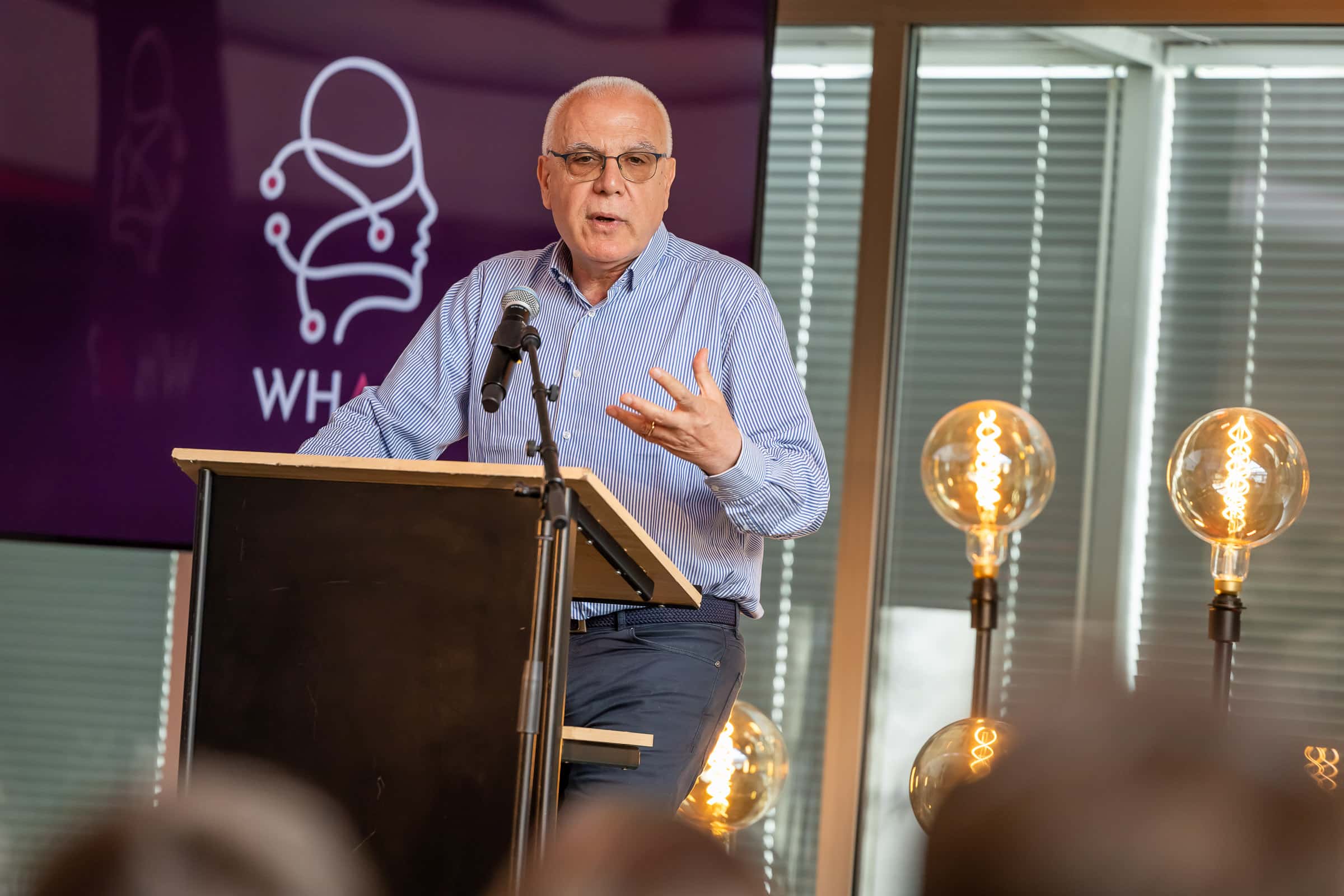
He also pointed to one small but powerful victory: the right, won in court, for unions to gain access to workplace data and algorithmic decision-making criteria. It was a start, proof that the algorithm is not untouchable. That transparency is not a dream, but a demand.
For De Rose, AI is not just a technical challenge. It is a test of union relevance. “If we do not engage with this now,” he warned, “we risk becoming spectators in the greatest transformation of labour in a generation”.
His call to action was clear: organise where the tech is. Demand transparency. Negotiate on data. And most of all: do not let the future be built without us.
Because the fight at Amazon is not just about one company. It is about who controls the digital workplace, and whether workers still have a voice inside it.
And yes, the Italian unions’ fight at Amazon was fruitful. After campaigning and strike actions, the responsible minister took action and brought the unions and company together. At the end of the discussions a CBA was signed, not only for Amazon’s workers, but also for Amazon’s subcontractors. A big win for Italian transport unions and an example to follow.
Facing the algorithm –
a union strategy for the age of AI
AI is not coming – it is here. That was the shared understanding as three sharp voices from the union world sat down for one of the most important conversations at WHAI?: How can trade unions rise to the challenge of artificial intelligence?
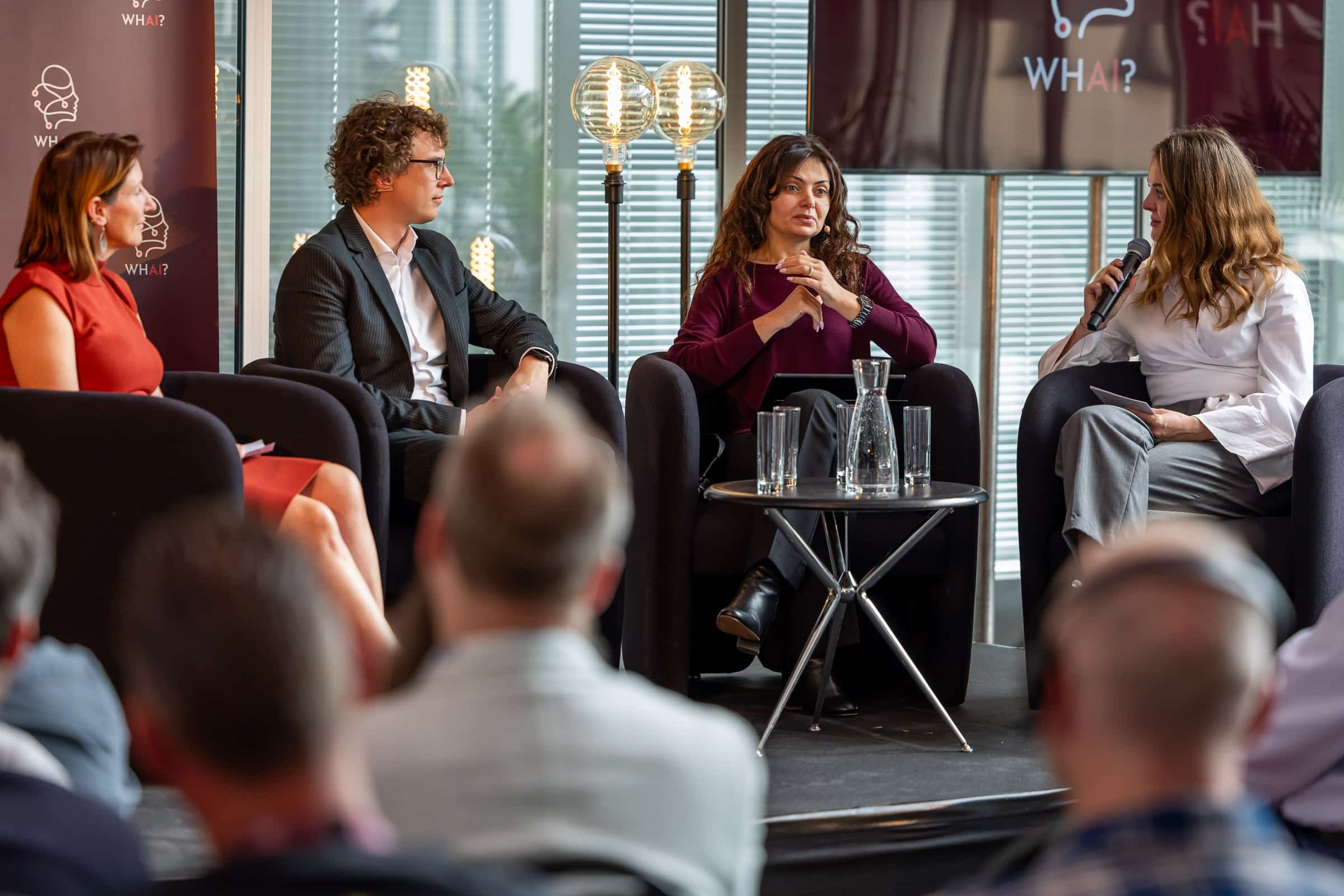
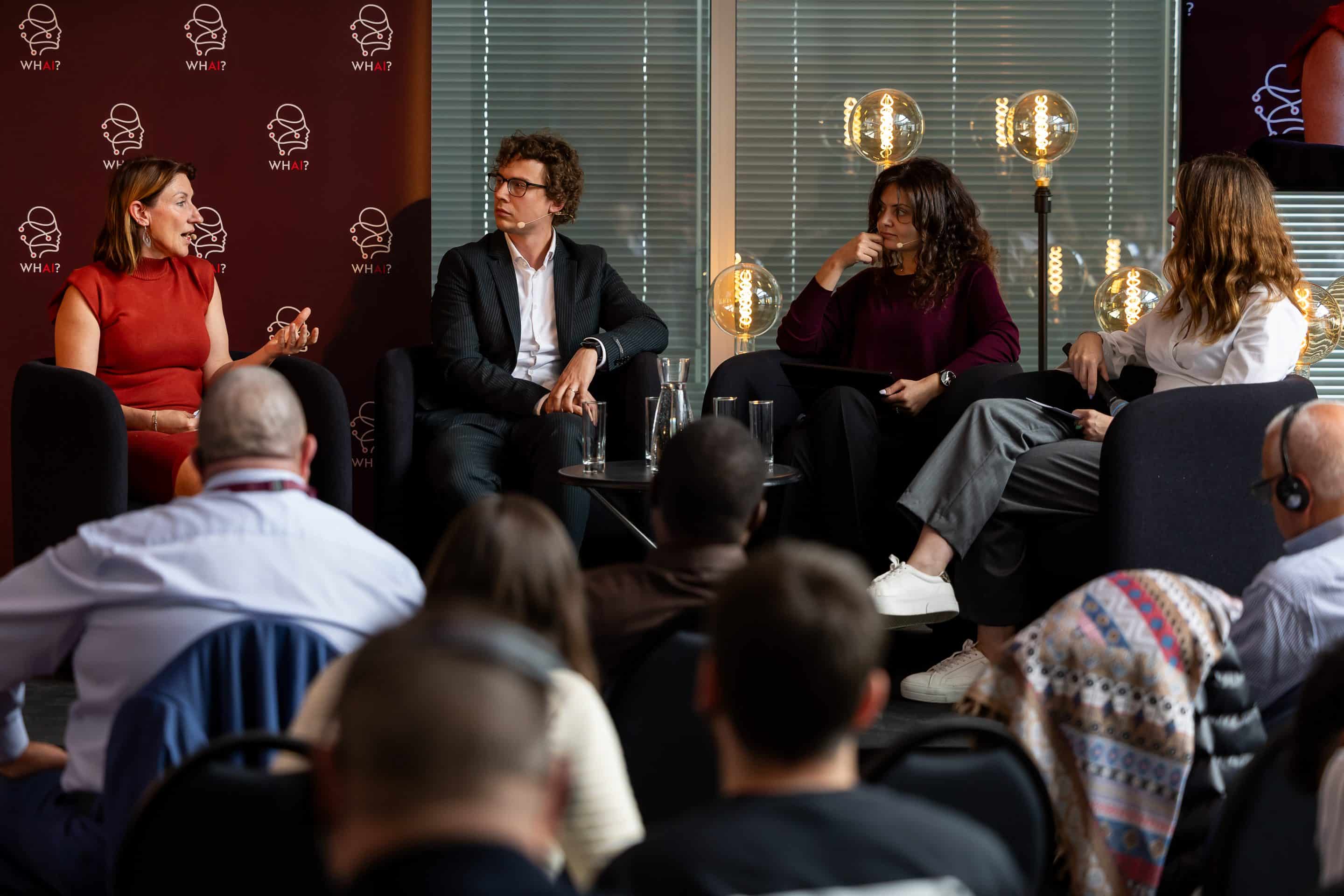
On stage: Baker Khundakji, ITF’s specialist on the Future of Work and Transport; Simon Taes, labour sociologist with expertise in digitalisation and labour rights and Sandra Gabriels, legal expert for BTB-ABVV and ABVV-Metaal. Together, they brought a rich blend of international scope, academic insight, and legal-practical experience – and one clear message: the fight for workers’ rights in the AI era starts now, not later.
The stakes
Baker Khundakji opened with a global overview. Across the transport sector – from shipping and aviation to logistics and ride-hailing – AI is already reshaping tasks, roles and power relations. But the technology itself, she said, is not the core issue. “The question,” she insisted, “is who designs it, who owns it, who decides how it is used.”
Her warning was stark: if unions do not engage proactively, AI will become another instrument for the erosion of rights, fragmentation of work and acceleration of inequality. “We have seen it with platforms,” she said. “Let us not make the same mistake twice.”
She pointed out that in order to set international standards, also for people working in the gig economy, unions have to act. The landscape of that sector is growing in a way that we cannot simply ignore. If we do not have dialogue, if we do not negotiate with these companies, we will not be able to improve the working conditions of the people in that sector. In the past decade, we have seen a five-fold increase in the number of platform workers across the world, the biggest being in the US, then, of course, Europe and then going further into India and other countries. This is a number we cannot simply ignore.
“The biggest challenge, and I refer to some of the conversations earlier, is the lack of regulations in this sector or when it comes to technology, generally. We do not have any frameworks that set the terms and conditions of these workers.”
But Khundakji also emphasised opportunity: the possibility for unions to develop their own expertise, build alliances, and make AI part of their bargaining agenda. “We do not just need to resist bad tech,” she said. “We need to co-create better systems.”
We do not just need to resist bad tech.
We need to co-create better systems.
The landscape
Simon Taes brought in the sociological and institutional lens. The use of AI in employment, he argued, reflects a broader shift towards individualised, data-driven management. Performance is measured in real time. Autonomy is eroded. Collective logic is replaced by algorithmic logic.
This poses a serious challenge for unions whose traditional structures are built around collective agreements, workplace representatives, and social dialogue. “But AI does not negotiate”, Taes said, “it executes”.
That does not mean we are powerless – far from it. Taes urged unions to build counter-power through knowledge, policy pressure and member education. “We need to demystify AI,” he said, “it is not magic. It is not neutral. It is negotiable”.
He also called for strategic investment: in research, digital tools and cross-sectoral collaboration – both within the labour movement and with civil society and academia.
We need to demystify AI. It is not magic.
It is not neutral.
It is negotiable.
The legal front
Sandra Gabriels brought it back to the shop floor. As a legal advisor, she sees up close how AI already infiltrates hiring, scheduling, evaluations and disciplinary systems – often without workers even knowing it.
She highlighted the lack of transparency, the rise of ‘black box’ systems, and the difficulty of legally challenging algorithmic decisions. “Traditional legal tools were not made for this,” she said, “we need new instruments – and unions need to help create them”.
Gabriels stressed the importance of the EU platform work directive, which could become a model for regulating algorithmic management. But she also warned: “Regulation is just the start. If unions are not present at the negotiating table, tech companies will write the rules themselves”.
She proposed a clear trade union agenda for the AI era:
- Mandatory transparency for algorithmic decision-making systems.
- Worker representation in the design and implementation of AI tools.
- Data governance as a pillar of collective bargaining.
- Legal empowerment of union reps to intervene in digital disputes.
The way forward
All three speakers agreed: this is not a fight we can win alone. It demands coordination across sectors, countries, and movements. It demands political courage. And it demands that unions see AI not only as a threat, but as a terrain – one we must learn to navigate, influence and shape.
The roundtable ended not with answers, but with a new kind of clarity: AI is not just about the future. It is about the present – and how we, as a movement, rise to meet it.
Because if algorithms are already defining the rules of work, then unions must become rule-makers too.
Traditional legal tools were not made for this. We need new instruments and unions need to help create them.
Algorithms on the job – fighting for fairness in platform work
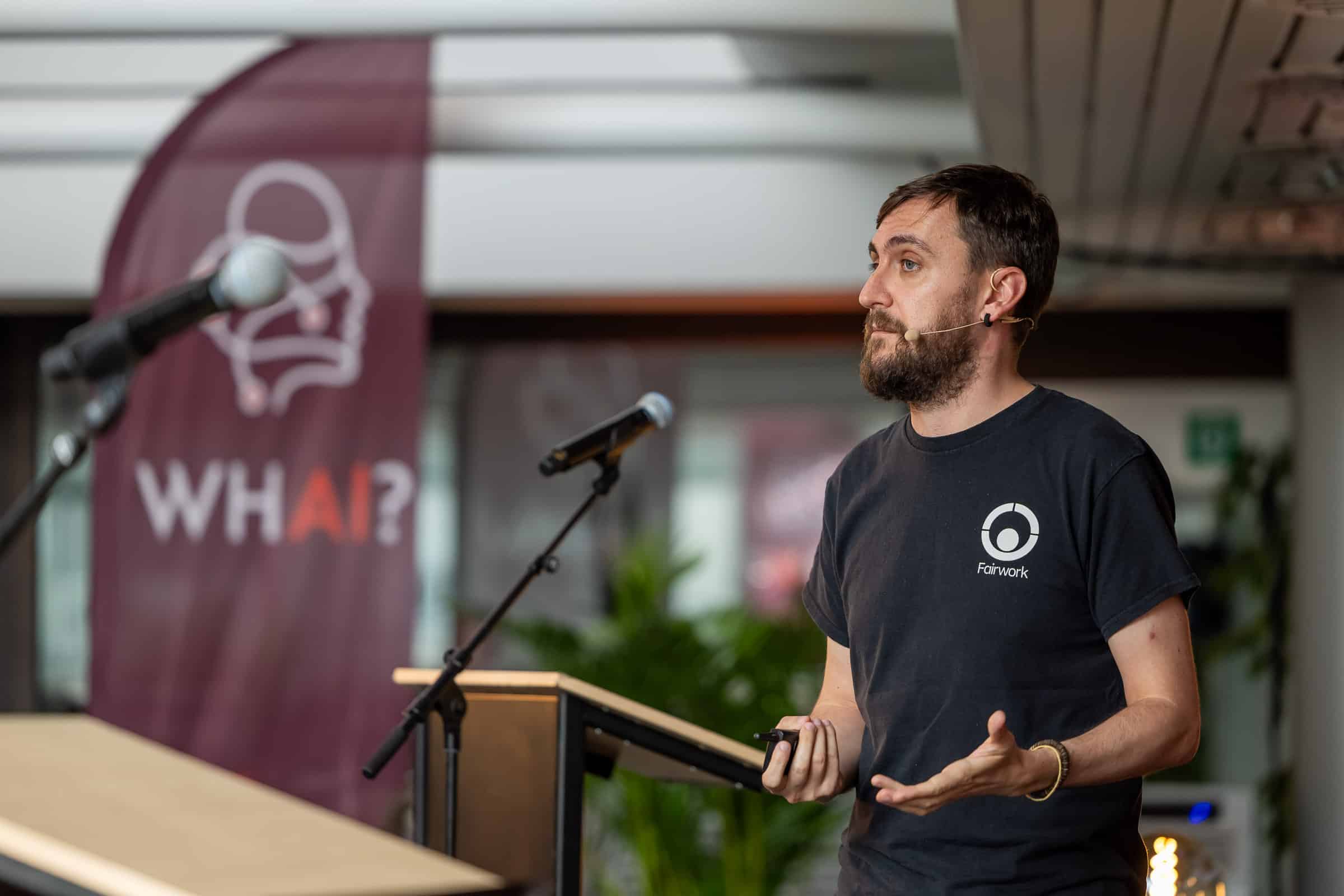
Alessio Bertolini, postdoctoral researcher at the Oxford Internet Institute and part of the Fairwork project, began his talk at WHAI? with a simple but uncomfortable truth: the future of work has already arrived – just not under fair conditions.
In many ways, platform workers are the frontline of algorithmic labour. They operate in a world where apps distribute work, monitor performance, assign pay and even deactivate accounts – all through systems most workers cannot see, question, or negotiate with.
This is not science fiction. It is daily life for millions of riders, drivers, carers, cleaners and freelancers across the globe. And as Bertolini stressed, these digital systems do not operate in a legal vacuum – they create one.
Beyond the myth of flexibility
Bertolini challenged the common rhetoric around platform work: the idea that it is all about freedom, flexibility and self-employment. In reality, many platform workers are trapped in what he called ‘algorithmic precarity’. They are classified as independent but are treated as subordinates. They carry all the risk, with none of the protections.
AI plays a central role in this imbalance. It enables companies to manage vast, dispersed workforces in real time – assigning tasks, evaluating performance and issuing penalties with cold efficiency.
Yet when questioned, these companies hide behind the neutrality of the algorithm or the complexity of the system.
But as Bertolini reminded the audience: “algorithms are not neutral, they reflect choices and those choices can be challenged”.
AI has exposed the gaps in our labour systems. But it has also shown us where to act.
Data, rights and power
What makes platform work so difficult to regulate, Bertolini explained, is the asymmetry of information. Workers do not know what data is collected about them, how it is used or what weight it carries in the decisions that affect their livelihoods. Without transparency, there can be no accountability and without accountability, there can be no justice.
This is why, he argued, data rights must become a trade union issue. The right to know how your performance is measured. The right to contest decisions made by algorithms. And the right to collective bargaining over the digital systems that shape working conditions.
He also pointed to the European Platform Work Directive as a step in the right direction – a legal framework that, if properly implemented, could give workers more protection and force companies to open the black box of algorithmic management.
But laws are only part of the answer. Bertolini insisted that unions must become more proactive: building digital literacy, organising platform workers, demanding algorithmic transparency and proposing alternative governance models.
Union strategy in the platform era
For Bertolini, the real question is not whether AI will change work – it already has. The question is whether trade unions are ready to fight on this new terrain.
That means:
- Bringing platform workers into the union movement.
- Negotiating on algorithmic systems, not just wages and hours.
- Using the law strategically, but not relying on it alone.
- Creating transnational alliances in response to global platforms.
But this also means that unions need to build expertise. In order for unions to be at the negotiation table as unions, bargaining about the introduction of AI and negotiating CBAs, unions need to know what they are talking about.
They need both experts and knowledge.
He closed with a message of cautious hope.
“AI has exposed the gaps in our labour systems,” he said, “but it has also shown us where to act”.
In the platform economy, unions are not obsolete. They are essential, not just to protect the past, but to shape the digital future of work.

WHAI? 2025
Workers, Unions & the Algorithmic Shift