
Chapter 4
Impact of AI on society?
Regulating the algorithm –
why humanS must stay at the centre
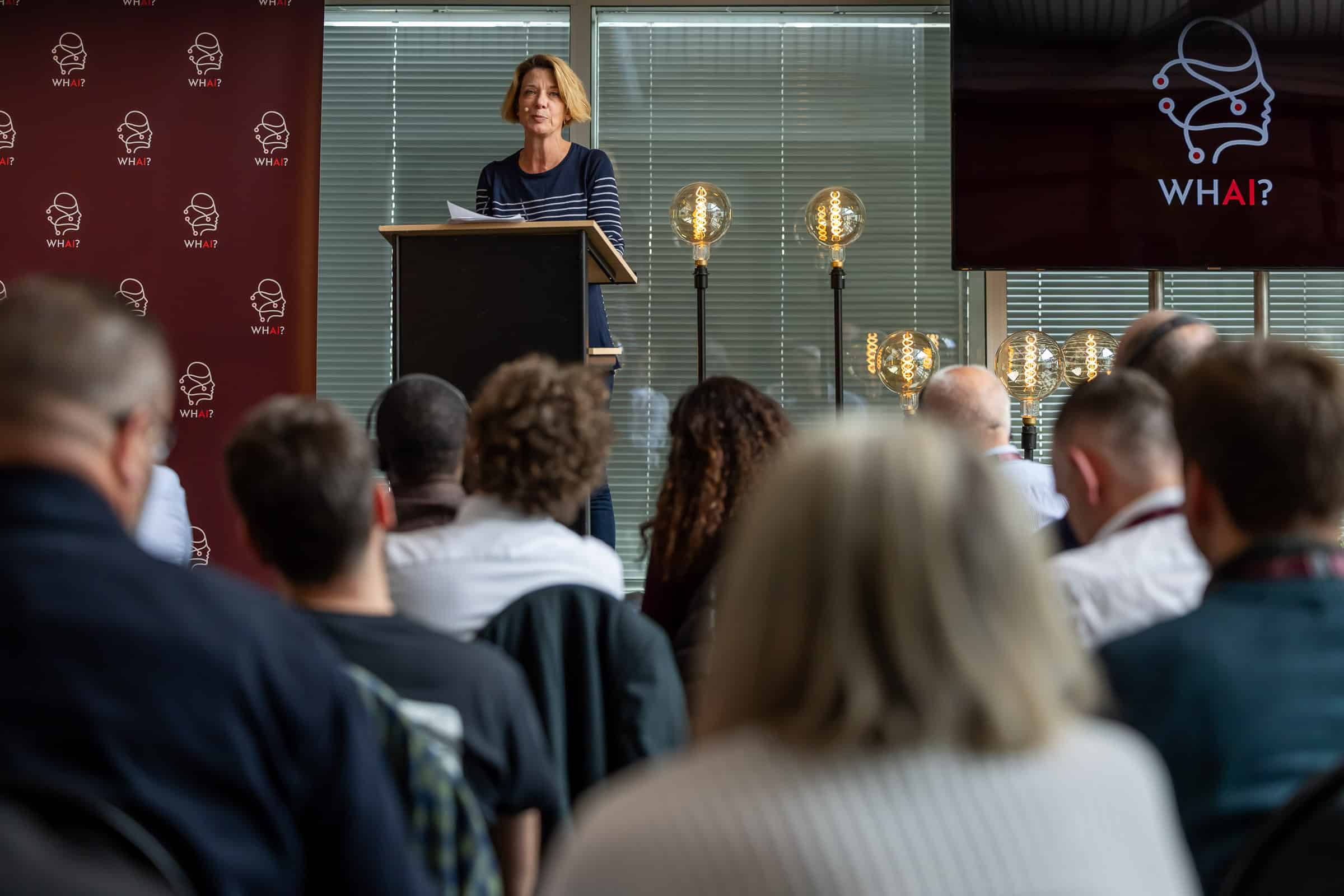
When Estelle Ceulemans stepped onto the WHAI? stage, she did not come as a tech expert or legal theorist. She came as a committed defender of social justice, a former union leader turned Member of the European Parliament who has spent her career fighting for equality and workers’ rights.
Her message was clear: AI is not just a technical challenge. It is a democratic one.
Ceulemans opened by recalling what regulation is really about: protecting the public interest. “We do not regulate technology because we fear innovation,” she said, “we regulate it to ensure that innovation serves people – not just profit”.
In her view, AI must be assessed through one core question: does it support human dignity?
Power without scrutiny
Ceulemans warned that we are entering an era in which decisions that shape people’s lives – about work, housing, education and even justice – are increasingly being made by systems we do not understand. “These systems are not neutral,” she emphasised, “they are shaped by human choices, biases and power”.
The risk, she said, is not just that AI will replicate inequalities, but that it will automate and legitimise them, under the guise of objectivity and speed.
She pointed out several examples: hiring tools that discriminate based on gender or race, predictive policing systems that reinforce structural bias and workplace surveillance tools that strip workers of autonomy and privacy.
Left unchecked, Ceulemans argued, AI could become an infrastructure for exclusion – invisible, unaccountable and devastating in its consequences.
We have faced systems of control before.
We have challenged them. And we have won. But only when we fought together.
The case for regulation
Against this backdrop, she made a strong case for clear, enforceable regulation at the European level. Voluntary codes and corporate promises are not enough. What’s needed is legislation that:
- Ensures transparency: people must know when and how AI affects them.
- Enshrines rights: no one should be subject to a fully automated decision without redress.
- Protects the most vulnerable: regulation must centre the rights of workers, minorities, and those without power.
Ceulemans highlighted the work of the European Parliament on the AI Act – an ambitious attempt to set global standards. But she warned that pressure from industry and certain governments threatens to water it down.
“Tech lobbyists are powerful,” she said. “But democracy must be stronger.”
The role of unions
Crucially, Ceulemans called on trade unions not just to react to AI, but to help shape it. “Unions know how power works,” she said, “they know how to build collective strength. And that is exactly what we need now”.
She urged unions to engage with policy debates, push for worker-centred digital rights, and demand a seat at the table wherever AI is being introduced.
The battle for AI regulation, she argued, is not a side issue. It is about the kind of society we want. A society where people are reduced to data points or one where technology remains in the service of humanity.
Ceulemans ended with a reminder rooted in her trade union past: “We have faced systems of control before. We have challenged them. And we have won. But only when we fought together”.
Between guardrails and growth –
the tension at the heart of AI regulation
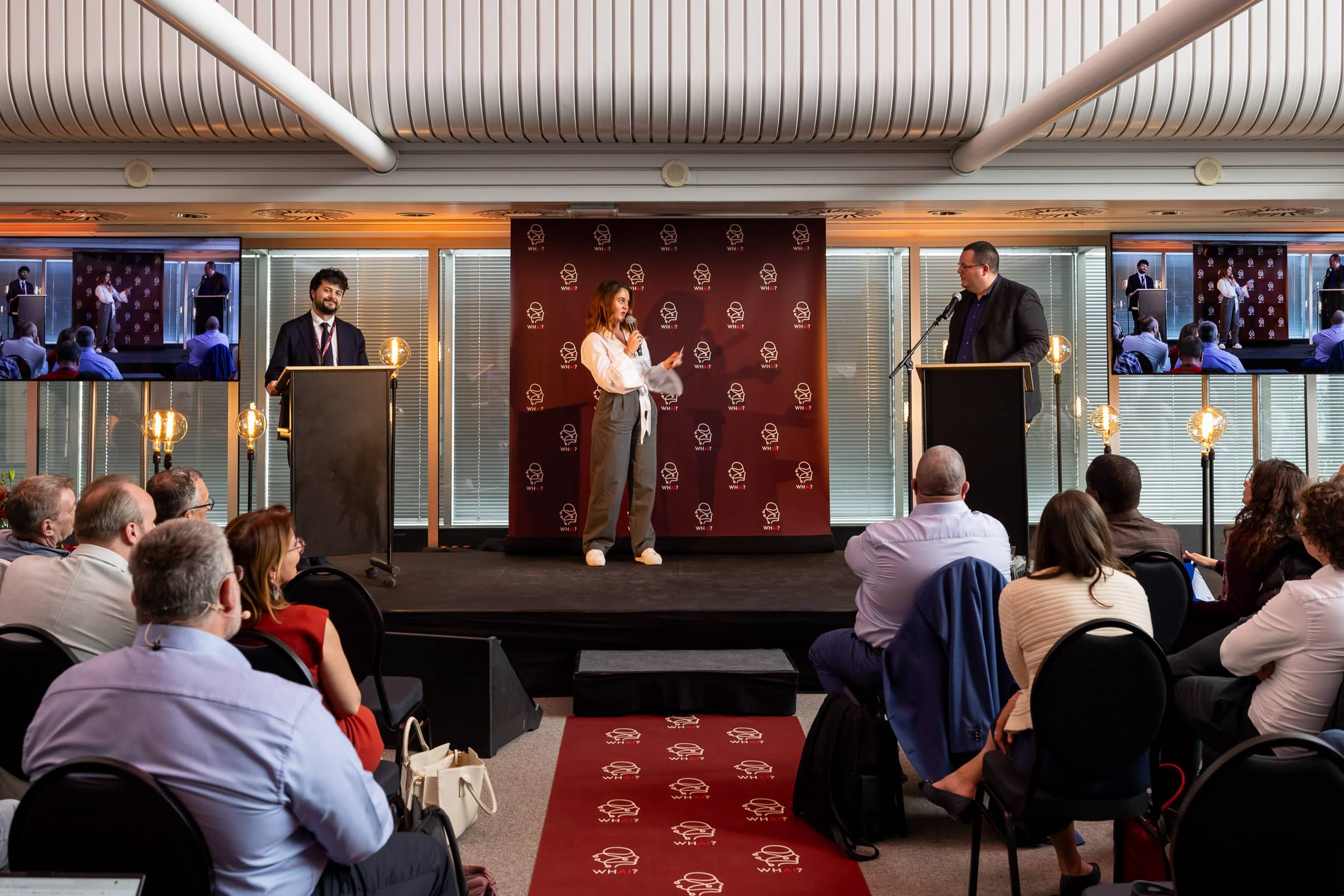
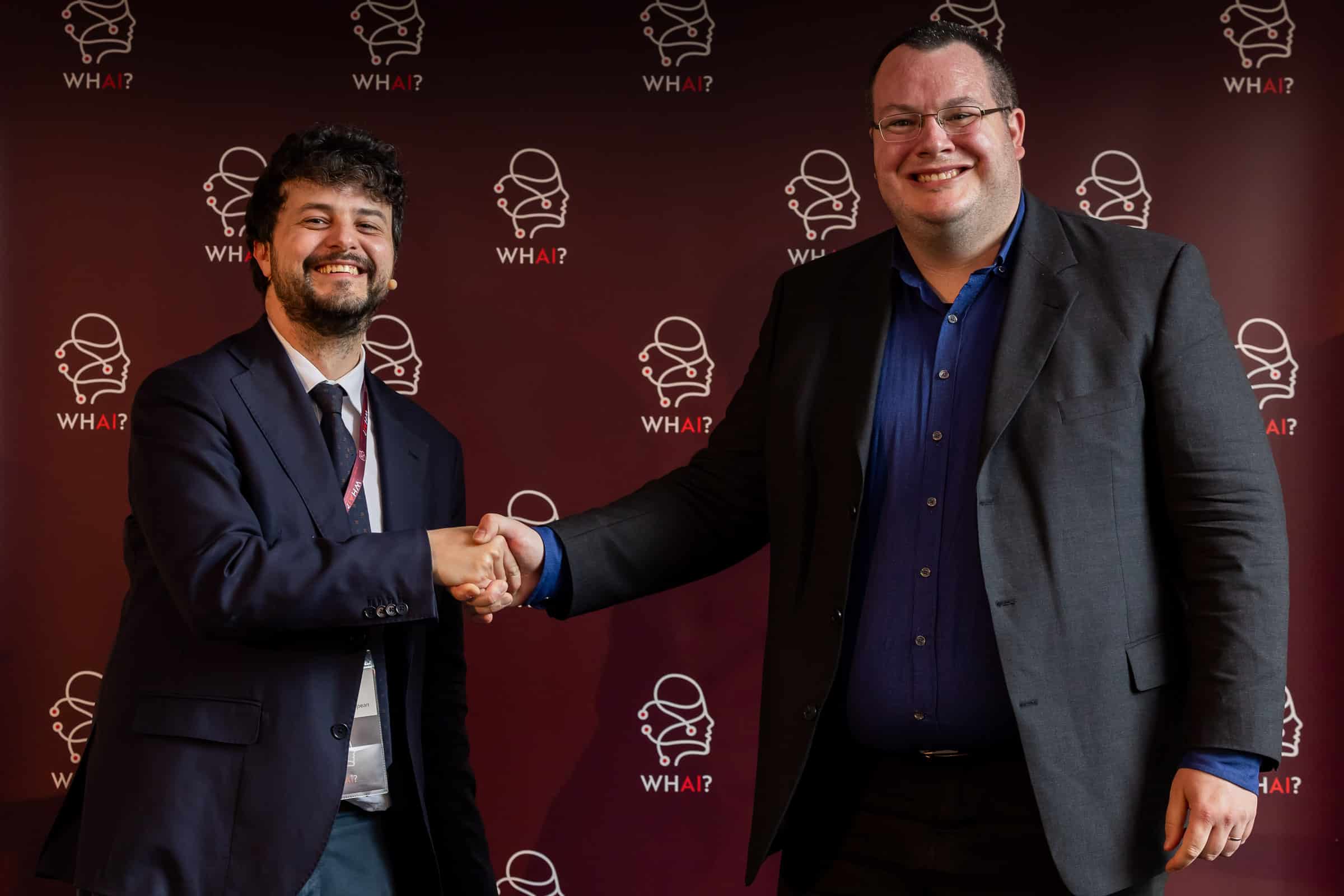
Few sessions at WHAI? embodied the tension surrounding AI more vividly than the debate between Brando Benifei and Patrick Glauner. Their exchange revealed a fundamental disagreement, not just about law or technology, but about what kind of society AI will help build.
On one side: Brando Benifei, a committed social democrat and member of European Parliament who was deeply involved in shaping the EU’s Artificial Intelligence Act. For him, regulation is a democratic imperative, a necessary step to protect fundamental rights and uphold social values in a time of fast-moving technological disruption.
On the other: Patrick Glauner, an AI scientist who believes current laws are sufficient and that new, rigid regulations will stifle innovation and hand Europe’s tech future to other global powers. For Glauner, the greatest threat is not misuse of AI, but overreactions to it.
Their exchange was respectful, but it pulsed with urgency. Because behind their arguments lay a deeper question: do we still believe public interest should guide technological progress or are we willing to let markets lead the way unchallenged?
The case for guardrails
Benifei defended the AI Act as an attempt to create a risk-based, balanced framework that does not ban innovation, but sets clear limits when human rights are at stake.
Facial recognition in public spaces? “A red line,” he said. AI used in employment, education or law enforcement? “These are high-risk applications and must meet strict requirements”.
Benifei reminded the audience that regulation is not about fear – it is about power. “Who controls the systems?” he asked. “Who is accountable when things go wrong? And how do we protect the people who are most affected – the workers, the marginalised, the vulnerable?”
To him, those are not theoretical questions.
They are political ones and the answers must come through law, not just code.
Regulation is not about fear – it is about power.
The warning against overreach
Glauner countered with sharp criticism of the AI Act’s complexity and scope. He warned that overregulation would cripple small European companies, push talent abroad and create compliance burdens that only Big Tech could afford.
In his view, the EU should focus on enforcing existing laws – data protection, anti-discrimination, and labour rights – rather than inventing new layers of bureaucracy.
He cited AI advances in the US and China and asked: “do we want to compete or regulate ourselves into irrelevance?”
Glauner was not opposed to all regulation. But he called for a lighter, more innovation-friendly approach and for policymakers to trust developers more than watchdogs.
No easy answers
The audience at WHAI? did not need to pick a winner as both perspectives revealed a real and difficult balancing act: between speed and care, growth and fairness, innovation and accountability. The union audience, however, clearly leaned toward Benifei’s position. Because for workers, especially those already facing surveillance, automation and algorithmic management, AI is not just an opportunity,
it is a battleground.
As one participant said after the session: “We have seen what happens when tech is left unregulated. We are living it. So, regulation is not the enemy.
It is the only protection we have”.
Benifei closed with a sober truth: “If democracy does not shape AI, something else will. And we might not like the results”.
The greatest threat is not misuse of AI, but overreactions to it.
Meanwhile on an international level
During the 113th Session of the International Labour Conference organised by the International Labour Organisation (ILO) in June 2025, discussions were held to establish new international labour standards addressing decent work in the platform economy.
Current status
The ILC has initiated the first phase of a two-year standard-setting process aimed at formulating a binding Convention complemented by a non-binding Recommendation, to safeguard the rights of platform workers. This initiative responds to the rapid expansion of platform-based work and the associated challenges in ensuring fair labour practices.
Key issues under discussion
The proposed standards seek to address several critical concerns affecting platform workers:
- Employment classification: correcting the misclassification of platform workers as independent contractors, which excludes them from essential labour protections. The new standards aim to establish clear criteria to prevent such misclassification.
- Fair compensation: ensuring that platform workers receive fair living wages, including compensation for waiting times and protection against arbitrary pay deductions.
- Social protection: extending access to social security systems for platform workers, covering health care, unemployment benefits and other essential services.
- Health and safety: implementing measures to protect platform workers from occupational hazards, including mental health considerations and safeguards against violence and harassment.
- Algorithmic transparency: mandating transparency in algorithmic decision-making processes that affect workers’ conditions, such as job assignments and account deactivations.
- Data protection: establishing strict guidelines on the collection, processing and storage of workers’ personal data to protect their privacy and autonomy.
- Collective bargaining rights: guaranteeing the rights of platform workers to organise, join unions and engage in collective bargaining without fear of retaliation.
These issues have been highlighted in a joint declaration by over 30 civil society organisations, trade unions, and human rights groups, emphasising the urgent need for comprehensive international standards.
Next steps
The discussions held at the ILC represent the first of two deliberative sessions. The second session is scheduled for 2026, during which the final texts of the Convention and Recommendation are expected to be adopted. This timeline allows for thorough consultation and refinement of the proposed standards to ensure they effectively address the complexities of platform work.
Silent threats –
AI, cybersecurity and the risk to infrastructure
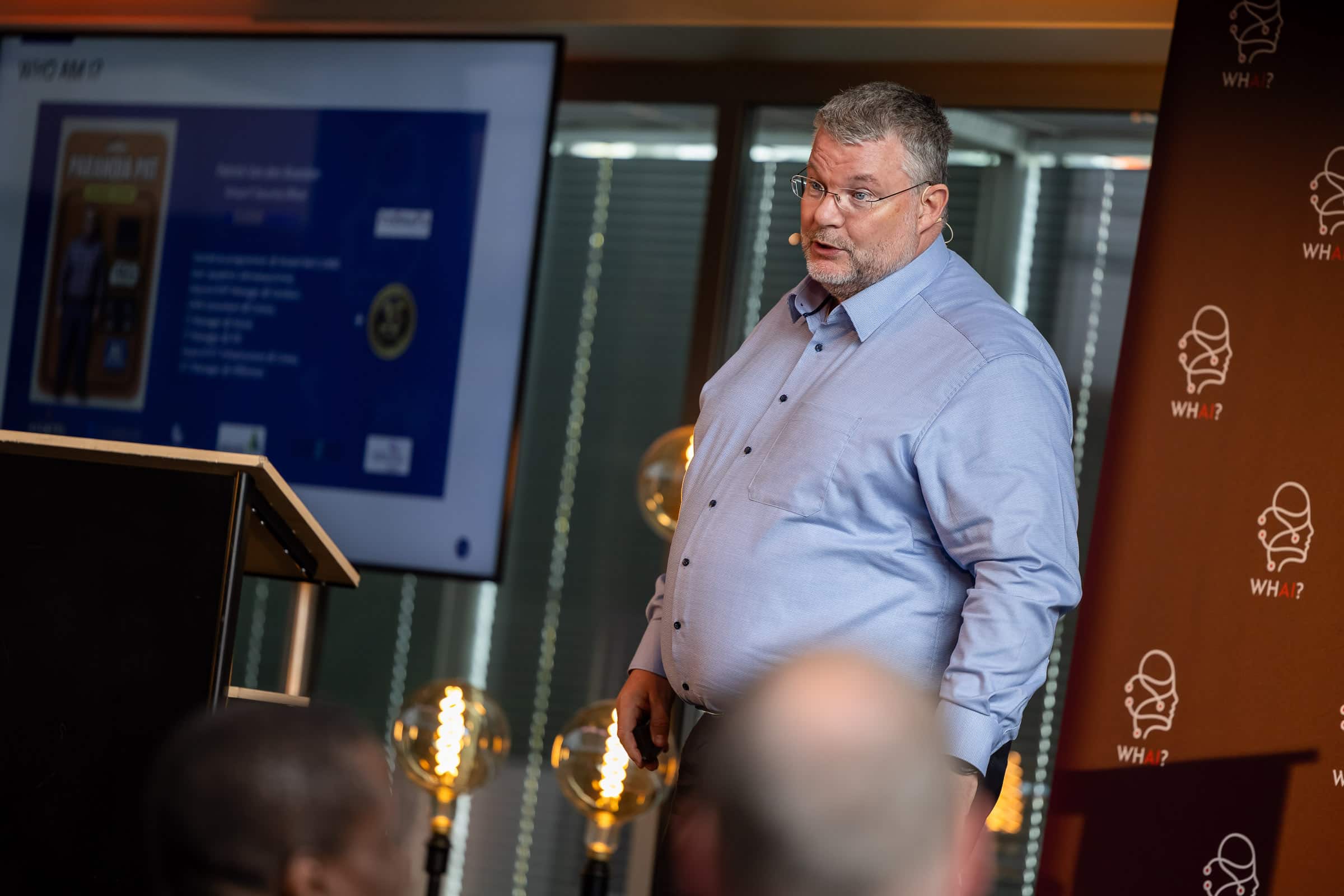
Patrick Van den Branden speaks the language of risk. As a Group IT Security Officer for a major company situated in the port of Antwerp, he is responsible for the invisible shields that protect systems, infrastructure and data in a sector where everything, from containers to customer records depends on trust and uptime.
At WHAI?, he stepped onto the stage to raise the alarm that cybersecurity is no longer a technical afterthought. It is a frontline issue in the age of AI.
From exploits to automation
Van den Branden began by laying out how AI is changing the nature of cyberattacks. Traditional attacks relied on scripts or phishing. But now, thanks to AI, malicious actors can scale, customise and automate attacks at previously unimaginable levels.
Deepfakes, spoofed emails generated by large language models (LLMs), automated vulnerability scans – all of it is happening faster and more persuasively and is often undetected.
The logistics and transport sector, he warned, is especially vulnerable. “We rely on real-time data, interconnected systems and automated processes. A small breach can shut down an entire operation.”
We all know what happened in the fully automated port terminal in Rotterdam. When the system was hacked the terminal went down for several days, with enormous financial repercussions.
And with the integration of AI tools into everything from fleet management to customer service, the attack surface is expanding. Every smart tool is a potential backdoor.
Trust is the new infrastructure
What Van den Branden argued was not fearmongering – it was a call for unions and employers to treat cybersecurity as part of our social responsibility.
Just like safe machines or clean air in the workplace, digital systems need strong protections. Not just for corporate continuity, but for workers.
Why? Because when a cyberattack hits:
- Wages cannot be paid.
- Shifts get cancelled.
- Sensitive worker data could be exposed.
When a cyberattack hits: wages can’t be paid, shifts get cancelled and sensitive worker data can be exposed.
So this is also a union issue: if we want workers’ rights to be protected we have to insist on cyber security.
He also warned of a darker trend like the weaponisation of AI against workers. Think of spyware, keystroke logging and behavioural profiling. “These tools already exist,” he said, “and they are marketed as ‘productivity enhancers’”.
That is why cybersecurity is not just about blocking hackers, it is about defending digital dignity.
The union angle
For trade unions, Van den Branden’s message was both urgent and empowering: you don’t have to be technical experts, but you do need to start asking the right questions.
He urged unions to:
- Demand transparency about the use of AI-based monitoring tools.
- Include cybersecurity clauses in collective agreements.
- Push for training and upskilling of workers to handle digital risks.
- Engage in company-level discussions about IT security governance.
Van den Branden also highlighted the importance of involving workers in conversations about data collection and digital infrastructure – not as passive users, but as co-owners of the systems that shape their work.
A closing warning and a challenge
AI, he concluded, is not just about doing more with less. It is about building responsibly. The line between convenience and surveillance and between automation and abuse, is thin – and getting thinner.
So, if we want AI to support society, its foundation must be secure – not just in code, but in ethics, law and collective action.
Because a world where everything is connected but nothing is protected, is not a world built for people.

WHAI? 2025
Workers, Unions & the Algorithmic Shift