Chapter 6
How can AI help trade unions?
Smarter tools, stronger unions –
using AI to empower representation
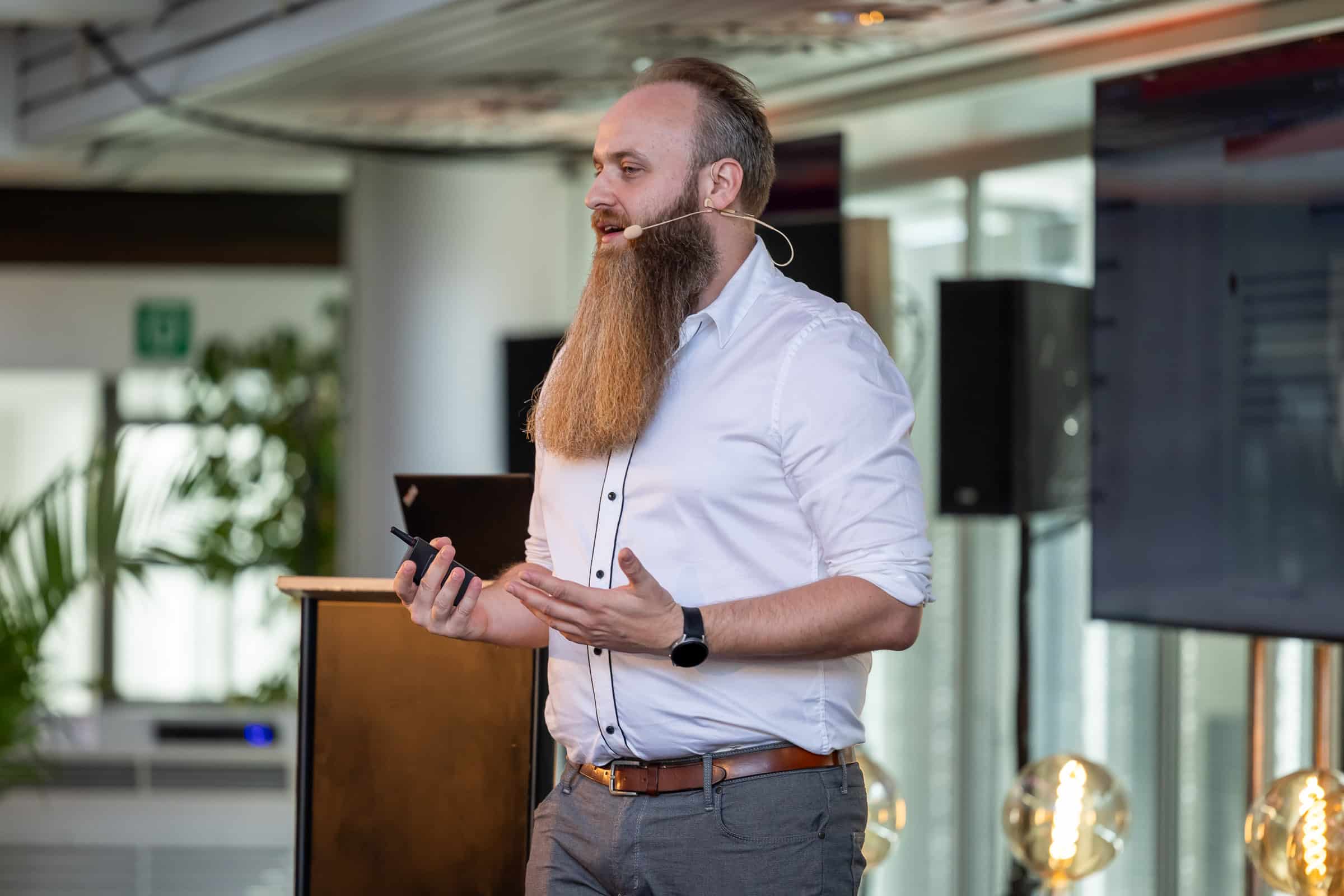
There is a saying in the trade union world: “You do not fight 21st-century battles with 20th-century tools”. At WHAI?, Tim De Grom showed us what this means in practice.
De Grom, a training officer at ABVV-Metaal, has been exploring how AI can strengthen the day-to-day work of union teams, by supporting the human touch, not replacing it. His approach is pragmatic, grounded in the needs of organisers, representatives and workers navigating a changing digital workplace.
His key message: AI is not just a threat to unions, it can be a tool for renewal.
From admin to action
De Grom opened by addressing one of the less glamorous but critically important aspects of union work: administration.
He described how AI tools can streamline internal processes, for example, by automating repetitive tasks like member data management, document classification and even basic communication flows.
Chatbots, for example, can provide quick answers to frequently asked questions, freeing up staff to focus on complex cases.
“It is not about replacing union officers,” he said, “it is about giving them time back – to be where they matter most: with the workers”.
This, he argued, is how AI can make unions more responsive, more agile and ultimately more human.
And he did not just explain what can be done. WHAI? got a demonstration of MetalBot, an AI tool developed by the Belgian metal workers’ union. The chatbot uses all CBAs, social security and labour legislation applicable to the Belgian metal industry to answer questions about workers’ rights in the industry in 58 different languages (www.metalbot.be).
The power of unions is in relationships.
AI must support that, never replace it.
Listening at scale
But De Grom did not stop at efficiency. He highlighted how AI can also enhance representational power. Natural language processing (NLP) tools can be used to analyse worker feedback, detect emerging concerns and spot patterns in grievances across large datasets.
For unions that represent thousands or tens of thousands of members, this offers a powerful way to listen more deeply and act more strategically.
He shared examples of how AI was being tested to help shop stewards prepare for negotiations by pulling together relevant case law, wage agreements, and benchmarking data in real time. What used to take days could now be done in minutes – with accuracy, insight, and confidence.
Ethics and boundaries
De Grom was clear-eyed about the risks.
He warned against using AI in ways that might compromise privacy, erode trust, or reduce members to metrics. He also rejected any suggestion that unions should use surveillance tools on their own members, even if the data could seem useful.
“The power of unions is in relationships,” he said, “AI must support that – never replace it”.
He urged all union actors to set clear ethical guardrails and to make sure workers are informed about and empowered by any AI tools used in representation or support.
A mindset shift
Perhaps De Grom’s most important point was about culture. “We have to overcome our fear of new technology,” he said, “because if we do not shape it, someone else will – and not in our favour”.
In his view, embracing AI is not just about staying relevant. It is about staying effective. It is about making sure unions are as strategic and data-driven as the employers and platforms they negotiate with.
He ended with a quiet provocation: “If unions do not learn to use AI, AI will be used against unions. So let us make the first move – on our terms”.
Negotiating with the algorithm –
AI and the future of collective bargaining
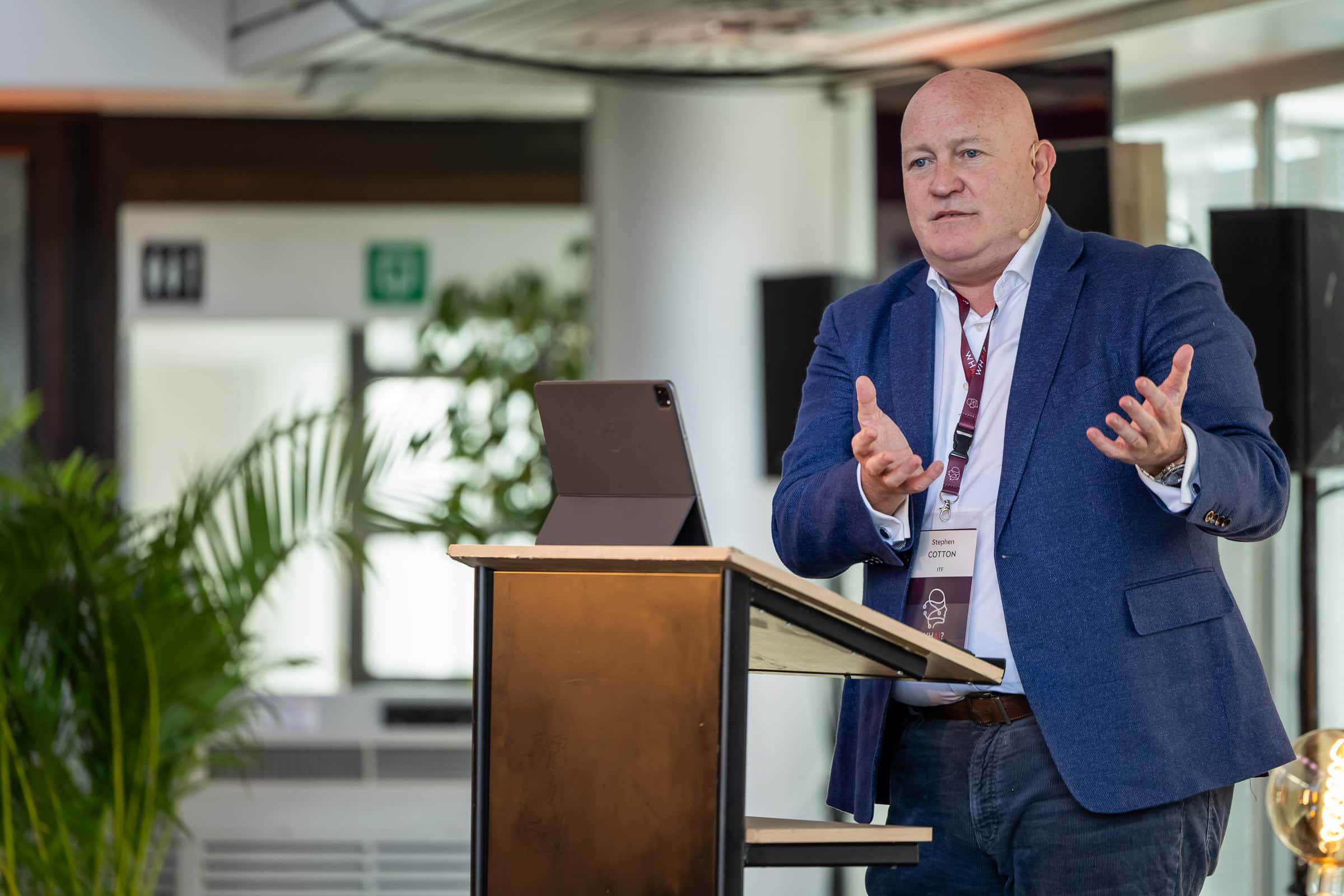
When Stephen Cotton took the floor at WHAI?, he did not mince words. “The future of work,” he said, “is being decided now – not just by governments, not just by companies, but increasingly by systems we do not see, do not fully understand and did not vote for”.
For trade unions, this is more than a wake-up call. It is a challenge to the very foundations of collective bargaining. And Cotton made it clear:
if we want to defend the rights of workers in the age of AI, we need to rethink what negotiation means and who or what we are negotiating with.
Collective bargaining in a digital world
Cotton began by tracing the evolution of bargaining, from basic wage agreements to comprehensive frameworks covering health, training, job security and now data.
Today’s workers, he explained, are often subject to performance evaluations, shift allocations and even disciplinary procedures determined by opaque algorithms. The real manager, in many workplaces, is not a person anymore. It is a system.
“Can you negotiate with a black box?” he asked. “Can you go on strike against an algorithm?”
The questions were rhetorical – but urgent. Because for unions to remain effective in this new environment, they must expand the scope of what bargaining covers.
That means demanding:
- Transparency in algorithmic decision-making.
- Access to data used to assess or manage workers.
- A right to human review for automated decisions.
- Clear limits on surveillance and profiling.
In short: AI must be on the bargaining table.
Building global counterpower
Cotton also stressed the importance of international coordination. “AI does not stop at borders,” he said, “and neither can our response”.
He pointed to ITF’s work with unions in platform transport, especially in cities where Uber, Bolt and other services are powered by complex data systems that govern everything from pay to access to work.
If we organise, educate and innovate then AI can become part of a future that is fairer, more transparent and more democratic.
In Belgium, for example, the social dialogue with Uber (referenced throughout WHAI?) showed that it is possible to negotiate with tech companies. But only when unions are organised, informed, and not afraid to push back.
He called for the development of global frameworks for algorithmic accountability, something the ITF is already advancing with its affiliated unions.
Cotton also praised recent victories in Australia, where the ‘Safe Rates’ campaign succeeded in gaining legal protections for gig workers, including rights linked to algorithmic transparency.
“These are victories not just of policy,” he said, “they are victories of mobilisation, solidarity and strategy”.
A seat at the table and control of the tools
But Cotton was clear that unions must go beyond reaction. He called for investment in digital literacy, not just for staff but for rank-and-file members. Because if AI is the new terrain of struggle, then unions need maps, tools and guides to navigate it.
That includes using AI to improve union work, from member outreach to bargaining prep, but always with strong ethical guidelines.
“We do not need to become tech companies,” he said, “but we do need to understand what tech is doing to our members – and what it can do for them”.
Red lines and new horizons
Cotton ended with both a warning and a vision.
“If we do not act now,” he said, “we risk letting AI become a tool of fragmentation, control and inequality. But if we organise, educate and innovate – then AI can become part of a future that is fairer, more transparent and more democratic”.
He called on every union leader in the room to start putting AI into their bargaining agendas, political demands and organising strategies.
Because the future of negotiations, Cotton reminded us, is not just about wages anymore. It is about who controls the code and whether justice is still something we can bargain for.
Reinventing solidarity –
why unions must embrace AI as an opportunity
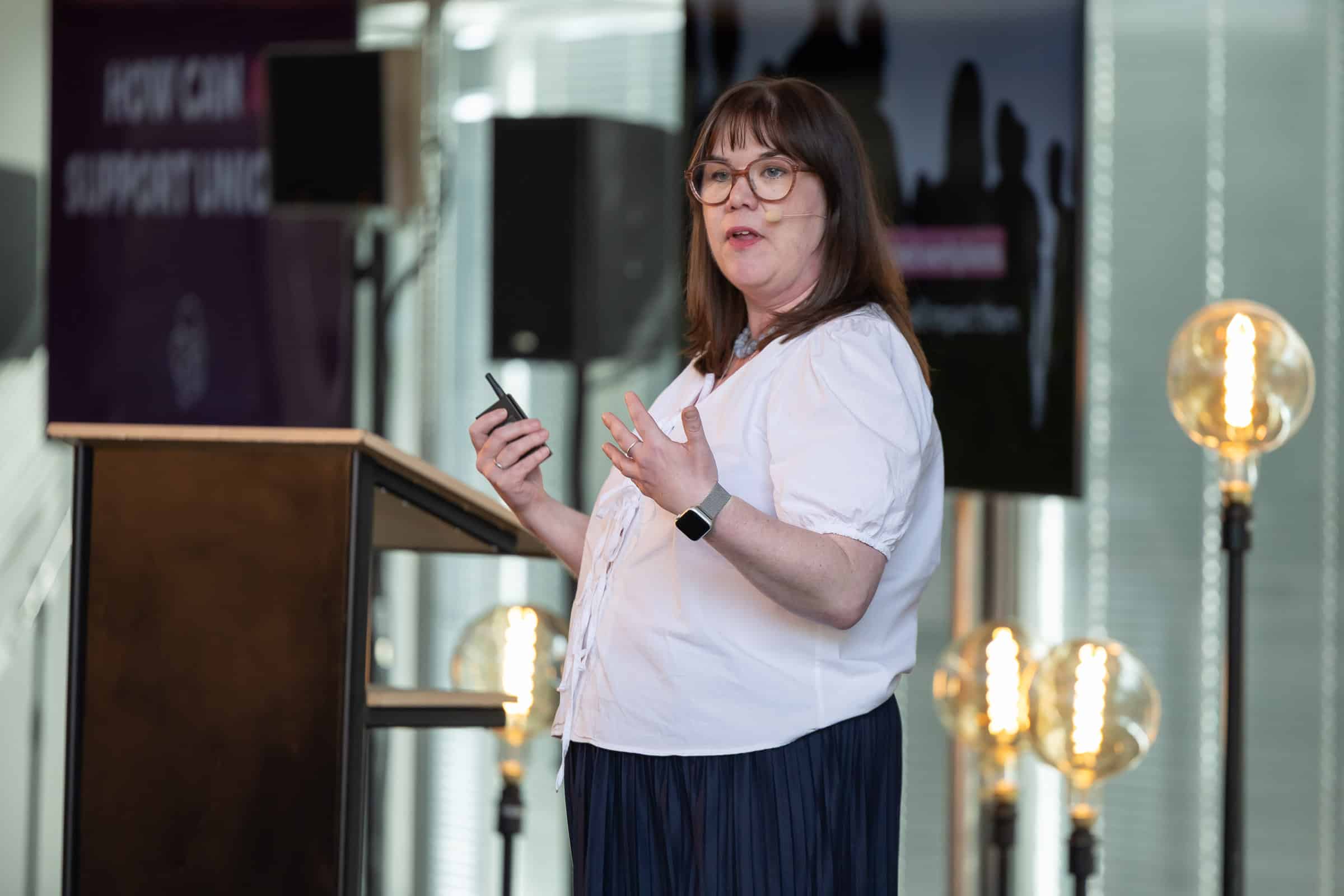
Becky Wright stood at the WHAI? podium with one clear goal: to shake off the defensive posture that so often defines the labour movement’s reaction to technological change.
“Too often,” she said, “unions are placed in the role of the resistor, the one saying no and dragging their feet. But we do not have to be the ones holding back change. We can lead it. We can shape it”.
Wright is no stranger to this tension. Through her work at Unions 21, a UK-based organisation dedicated to union innovation, she has seen how fast the world of work is moving and how difficult it can be for institutions built in the 19th and 20th centuries to keep pace in the 21st.
But her message was clear: unions are not outdated. They are under-updated.
And AI, for all its risks, offers a powerful lever for renewal.
Reaching the unreachable
One of the biggest promises Wright sees in AI is the ability to reach workers who are often left out of traditional organising models: platform workers, shift workers, freelancers and those spread across sectors and geographies.
With AI-powered tools, unions can:
- Identify trends and hotspots through real-time data.
- Tailor communications and support to individual needs.
- Use predictive insights to inform bargaining or campaigns.
“It is not about surveillance,” Wright said, “it is about service. It is about making every member feel seen, heard and supported – at scale”.
She shared examples of chatbots used to onboard new members, machine learning tools that help map supply chains and even AI-assisted grievance handling platforms.
These tools, she insisted, do not replace organisers. They empower them. They allow unions to do what they have always done – but faster, smarter and more strategically.
Designing with, not for
Wright was careful to warn against a purely technocratic approach. “You cannot just buy a shiny AI tool and expect it to solve your problems,” she said, “the key is co-design”.
We do not have to be the ones holding back change. We can lead it. We can shape it.
She urged unions to bring members, especially younger ones, into the process of digital transformation. Let them test tools, critique them, and shape how new systems reflect union values.
And when it comes to AI systems used in workplaces, Wright was adamant: unions must demand a seat at the design table.
“Collective bargaining is not just about wages anymore,” she echoed Stephen Cotton. “It is about how work is designed, measured and managed, which is often done by algorithms. We have to be in those conversations from the start”.
Shifting mindsets
Wright acknowledged that fear is real. AI feels abstract. It can seem like the domain of Silicon Valley, not the shop floor. But she insisted that waiting is riskier than acting.
“AI is already changing the world of work,” she said. “The question is whether unions are part of that change – or left behind by it”.
To move forward, she said, unions need a cultural shift: a willingness to experiment, fail fast and learn from others. This does not mean abandoning principles, instead it means applying them in new contexts.
Her vision was not of unions becoming tech companies – but of unions becoming more agile, more inclusive and more future-facing.
A new chapter in union history
Wright closed with a simple truth: every generation of trade unionists has had to adapt. From the rise of factories to the spread of globalisation, unions have survived and thrived by being bold.
“AI is just the latest chapter,” she said, “and like every chapter before, it is one we must write ourselves – with courage, with care and with confidence”.
Her final message was a call to action: “This is our moment not to resist the future, but to shape it. Let’s build the kind of digital world we actually want to live in, one where fairness, dignity and solidarity are not afterthoughts, but embedded from the start”.
WHAI? 2025
Workers, Unions & the Algorithmic Shift