Conclusion
Let me tell you WHAI?
Let me tell you WHAI?
During the WHAI? Conference, we have covered a lot of ground. We have listened to academics, union leaders, public officials and activists. We have heard about algorithms and logistics, legal loopholes and ethical dilemmas. We have explored how AI is reshaping the world of work and the world beyond it.
But now it is time to take a step back. To ask ourselves: what did we really learn?
Because this was never just about technology. It was about power. Democracy. The future of solidarity.
Let us be honest: we know what is coming. Automation is accelerating. Data are being harvested, sold and used to make decisions without any explanation. Platform work is expanding, often without rights or protection. And across all sectors – from transport to logistics and services – AI is creeping in through systems that affect everything even though we barely understand them. That is the world we live in. But we also know something else: we are not powerless.
This conference reminded us that we can act.
We have experience. We have tools. We have each other.
It is clear that we have to work on two levels now.
How do we deal with AI in the workflow of our transport economy?
How can we, as unions, use AI in our union work to grow stronger?
To achieve success on the first level, there are a number of steps we need to take.
First of all, what should unions demand? Some elements became very clear during the discussions at the conference. One of these elements was transparency. If an algorithm is making decisions about workers, we have the right to how it works. No more black-boxes.
Secondly, collective bargaining over technology is really very important and a priority for us. AI cannot just be installed in the workplace without consultation. We must make CBAs about data use, privacy, workloads and training, not only for the main company, but, as our Italian colleague explained, also for subcontractors and the whole supply chain.
And yes, we will need to build our expertise as unions to do so.
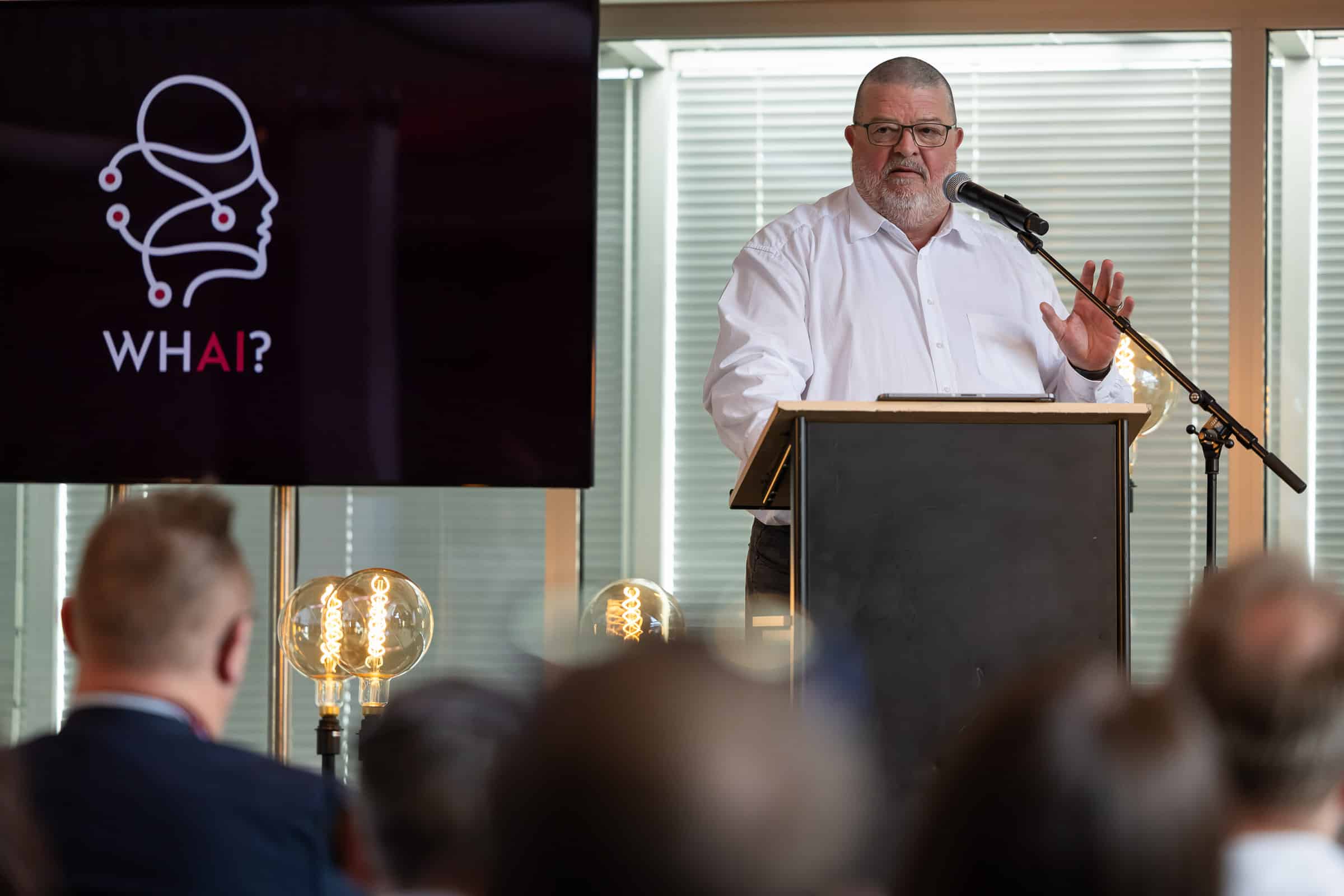
Thirdly, there needs to be a just transition. If jobs are lost, workers must be supported through upskilling, redeployment, income guarantees or early retirement options. This must be a part of any technological rollout.
Fourthly, social dialogue. Governments, employers and unions must work together. AI policies, whether national or sectoral, must include the voice of the workers from the start.
And finally, shared gains. If AI increases productivity, then the workers must get their fair share. That means shorter working time, better pay and investment in quality employment, not just bigger profits for shareholders.
We are trade unionists. And this means we are not afraid of complexity nor change. We face it.
We organise. We fight.
So let me tell you WHAI:
It is not just about asking what AI is. It is about asking why it is being used, how it is being governed, who benefits and who is left behind.
It is about confronting this new form of power with the oldest and strongest tool we have: our collective voice. And we will not be bystanders.
In the coming years, we need to bring AI into our bargaining agendas, political demands, training programmes and our streets.
Because if AI is the next battlefield for workers’ rights, then we intend to fight on it.
Not with fear, but with vision. Not with slogans, but with proposals. Not with isolation, but with solidarity.
So let me finish with this:
This is not the end of our conversation. It is the beginning of a broader mobilisation.
We will not let the future be written without us. WHAI? Because it is time.

WHAI? 2025
Workers, Unions & the Algorithmic Shift